
Car heater blowing cold air
The usual reasons a heater blows cold in an Ottawa winter, roughly in order of how often they turn out to be the cause, and what you can check in the driveway.
Start with what you notice
On a minus 20 morning in Ottawa, Ontario, any car takes a while to blow warm air. A small engine on a short trip may never get the cabin properly warm, which is normal. The problem is when the engine has been running for fifteen or twenty minutes and the vents are still cold.
Before guessing at parts, notice three things. Where does the temperature gauge sit once you have been driving a while. Does the fan blow, just not hot air. And does it change with engine speed, or when you set the temperature to full hot.
If the fan does not blow at all, that is a different problem: the blower motor, its resistor or a fuse. The rest of this post is about the fan working but the air coming out cold.
Low coolant
This is the most common cause. The heater works by running hot engine coolant through a small radiator behind the dash, called the heater core. When coolant is low, the heater core is one of the first places to lose flow, because it sits high in the system. You can have no heat while the engine itself still looks fine on the gauge, at least for a while.
Check it with the engine cold. Never open the radiator cap or the coolant reservoir on a hot engine, because the coolant is under pressure and can spray out. Look at the plastic reservoir and compare the level to the cold mark.
If it is low, it went somewhere. Look for drips under the front of the car, crusty residue on hoses and the water pump, or a sweet smell after a drive. Topping up gets you heat back for now, but the leak has to be found. A head gasket that leaks coolant into the engine is less common, but it shows up as coolant loss with no drip and white, sweet smelling exhaust.
A thermostat stuck open
The thermostat keeps coolant inside the engine until it warms up, then opens to let it flow to the radiator. If it sticks open, coolant goes through the radiator from the moment you start. In the cold, the engine never reaches its normal temperature.
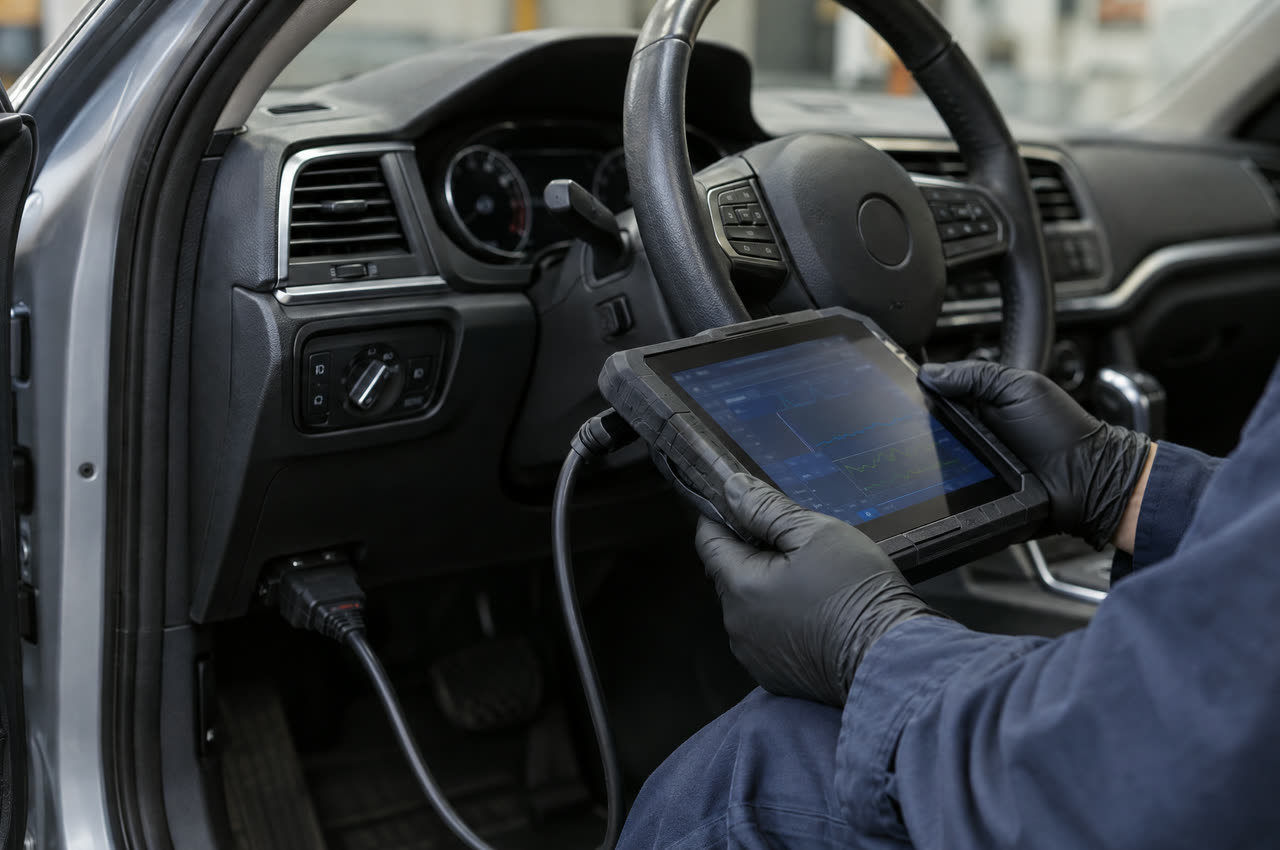
The signs are a temperature gauge sitting lower than usual, heat that is lukewarm at best, and heat that gets worse on the highway, when cold air is forced through the radiator. It often sets a check engine light, with a code like P0128 for coolant temperature below the thermostat’s regulating temperature. A diagnostic scan confirms that quickly.
A stuck thermostat also costs you fuel, because a cold engine runs rich, and it is harder on the engine over a winter.
A clogged heater core
If the coolant is full and the engine reaches normal temperature, but the heat is still weak, the heater core may be partly blocked. Old coolant, mixed coolant types or a stop leak product can all leave deposits in the small passages.
A quick check with the engine fully warm: find the two heater hoses where they go through the firewall at the back of the engine bay. Both should be hot. If one is hot and the other is much cooler, coolant is not flowing well through the core. Be careful, the hoses and parts around them can burn you.
Sometimes a flush brings the flow back. If not, the core needs replacing, which on many cars means taking much of the dashboard apart.
A blend door or its motor
Behind the dash, a small door decides how much air goes through the heater core and how much bypasses it. Most cars move it with a small electric motor called an actuator. If the actuator fails, or the door breaks, it can get stuck on the cold side.
The clues are a clicking or tapping from behind the dash when you change the temperature, heat on one side and cold on the other in a car with dual zone climate control, or temperature that does not change at all when you turn the dial. The engine side of things will look normal.
Air in the cooling system
If the heat disappeared after a coolant repair, a water pump or a radiator, there may be an air pocket trapped in the system. Air tends to collect at the high points, and the heater core is one of them. You might hear gurgling behind the dash, especially when you start off or go over a bump.
Some cars purge air on their own after a few drives. Many need to be bled properly, with the engine warm and the heater on, through a bleeder valve or with a filling funnel. Until it is bled, the engine can also run hotter than it should.
Less common causes
A water pump with a worn impeller can spin without moving enough coolant, so heat is weak at idle and better when you rev the engine. A collapsed or kinked heater hose can do the same. These are rarer, but they come up once the common causes are ruled out.
Getting it fixed
You can read about what we test on the no heat and heater repair page. If the cause turns out to be a coolant leak from the water pump, a gasket or a hose, that work falls under engine repair.
SA Auto Repair is at Unit 1, 1541 Star Top Road, beside Highway 417 Exit 112 at Innes Road. We are open weekdays from 8:30am to 6pm and Saturdays from 9:30am to 2pm. Book online under no heat and tell us what the temperature gauge does, whether the fan blows, and whether coolant has been added recently. If the engine is overheating, do not drive it in. The shop does not tow, so arrange a tow or call first.
Questions people ask
Why is my car heater blowing cold air?
The most common cause is low coolant, usually from a leak. After that come a thermostat stuck open, a clogged heater core, a failed blend door or its motor, and air trapped in the cooling system after a repair. Checking the coolant level and watching the temperature gauge narrows it down quickly.
Can a bad thermostat cause no heat?
Yes. A thermostat stuck open lets coolant circulate through the radiator all the time, so the engine never fully warms up. You will see the temperature gauge sitting low and the heat lukewarm, especially on the highway. It can also set a check engine light.
Is it safe to drive with no heat in winter?
Not for long. Without heat the defroster cannot clear the windshield, which is a visibility problem in an Ottawa winter. If the cause is low coolant, the engine can also overheat. Check the coolant level and the temperature gauge before you drive.
How do I know if my heater core is clogged?
The engine reaches normal temperature and the coolant is full, but the heat stays weak or cold. With the engine warm, both heater hoses at the firewall should be hot. If one is hot and the other is much cooler, coolant is not flowing well through the core.
How do I know if my heater core is leaking?
Common signs are a sweet smell inside the car, a greasy fog on the inside of the windshield and a damp carpet on the passenger side. The coolant level also drops with no leak visible under the car. A leaking heater core should be fixed soon, because coolant fumes in the cabin are not good to breathe.
Related work
Book a time that suits you
Pick a time on the booking page whenever it suits you, describe what the car is doing and add a few photos. Drop it off by 2pm on the day you picked.