Why Ottawa winters find the weak batteries
A battery makes its power through a chemical reaction, and cold slows that reaction down. On a minus 25 morning in January, a battery that was fine in October has a fraction of the cranking power it had, while the engine oil has thickened and the starter has to work much harder to turn the motor over. That is why the first real cold snap sends so many cars to the shop on the same week.
The damage usually happens earlier. Summer heat under the hood breaks a battery down from the inside, and short trips never let the alternator top it back up. Ten minutes on the 417 to work, a quick run to the grocery store on Innes Road, then the car sits outside overnight. A battery living that way slowly runs undercharged, and an undercharged battery also freezes more easily.
How we test a battery
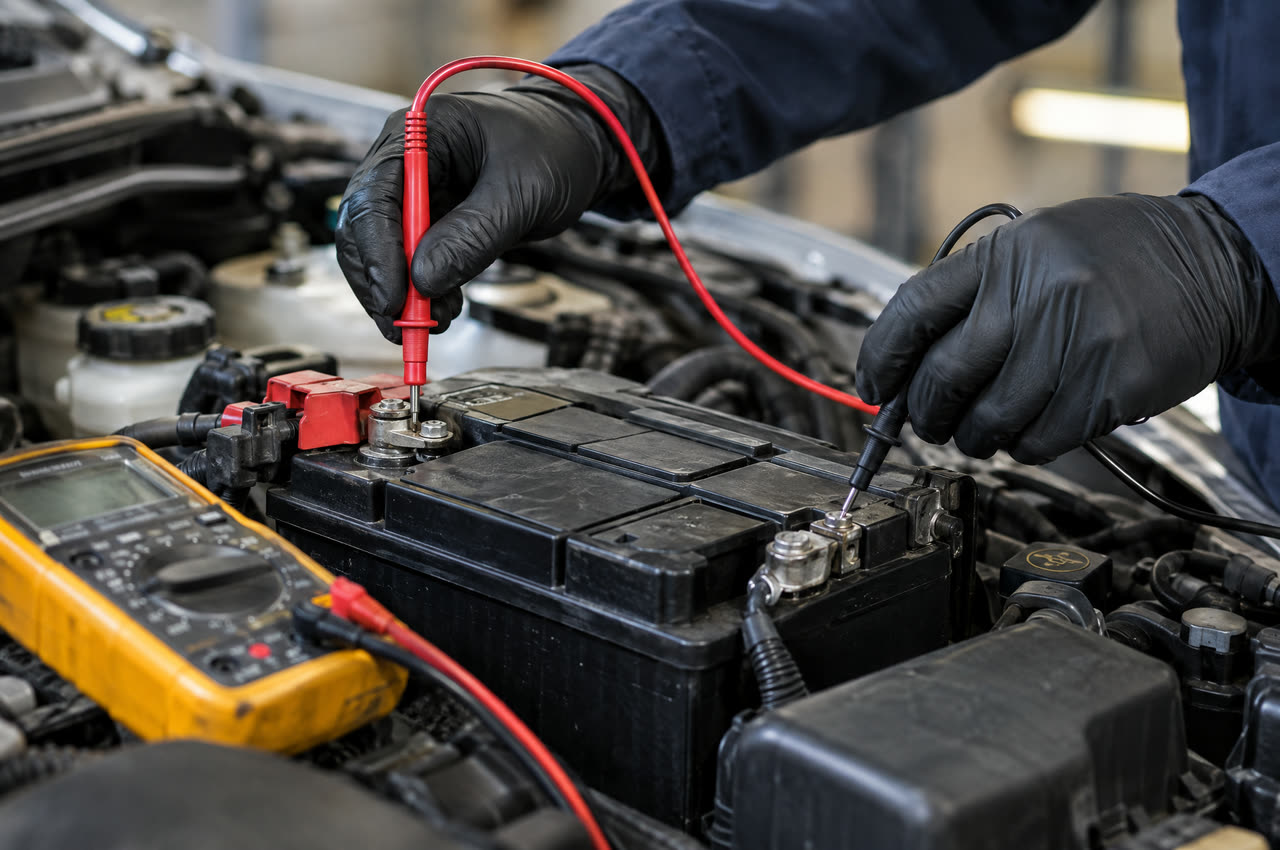
We load test the battery and check the charging system before selling you a new one. A battery can show a normal voltage at rest and still fall flat the moment it has to crank, so the test measures what it can actually deliver against what it is rated for.
The rest of the check covers the things around the battery:
- The terminals and cable ends, for the white or green crust that blocks current, and clamps that are loose on the posts.
- The hold down, since a battery that moves around wears out its plates and can rub a hole through the case.
- The alternator output with the engine running, with lights, blower and rear defroster on, so you know the new battery will actually get charged.
- If the battery keeps going flat with the car parked, a draw test with everything off to find what is pulling power.
If the battery tests fine and the charging system is fine, you keep your battery. If the problem is a corroded cable or a loose clamp, that is a much smaller bill than a battery.
Signs your battery is on the way out
- The engine cranks slower than usual on cold mornings, then catches.
- The clock or radio presets reset after the car sits.
- The headlights dim when you are idling at a light and brighten when you rev.
- The battery or charging light flickers on the dash.
- The battery case looks swollen or the top is wet around the posts.
- The date sticker on the battery says it is more than four or five years old.
Any one of these in the fall is a good reason to have it tested before the cold does it for you. If the car has already stopped starting, our page on a car that won’t start explains what to do first, including how to get it here, since we do not tow.
Choosing the right battery
The battery has to fit the tray and the cables, so the group size is set by the car. Within that size, the numbers that matter for Ottawa are cold cranking amps, which is the power the battery can give at minus 18, and reserve capacity, which is how long it can run the car’s electrics if the alternator stops charging.
The price depends on the make, model and year and on the battery quality, from a standard battery to a high performance one. A standard battery suits a car that is driven daily and parked in a garage. A higher tier makes sense for a car that sits outside all winter, does short trips, or has heated seats, a heated steering wheel and a remote starter all pulling power.
Cars with start stop systems, and many newer cars with a lot of electronics, come with an AGM battery from the factory. Those need an AGM again. Putting a cheaper flooded battery in its place saves money on the day and usually costs more later.
Cars that need more than a swap
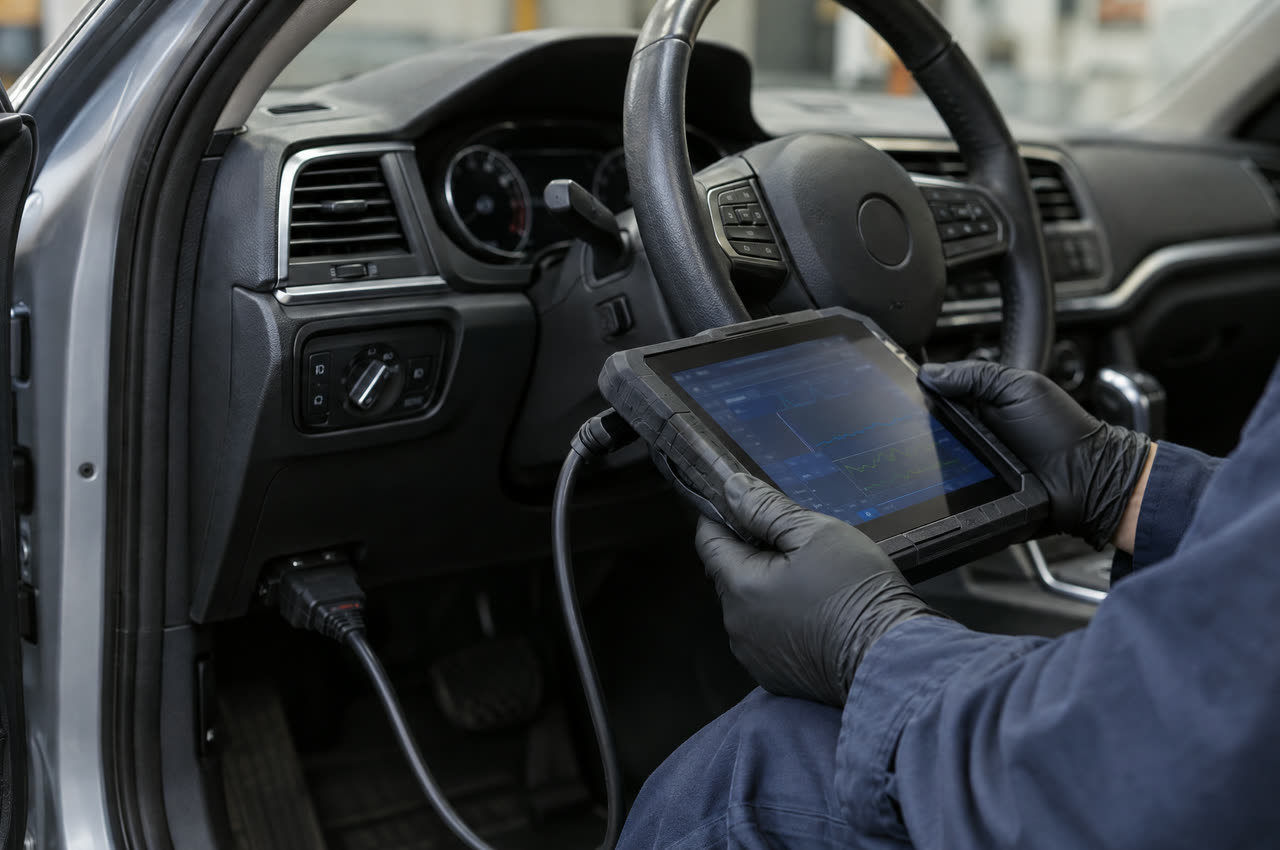
Some cars do not let you just drop a new battery in. Many European models and some newer domestic ones have a battery sensor, and the new battery has to be registered with a scan tool so the car charges it correctly. Some batteries live under a seat or in the trunk, and some cars lose radio codes or window settings when the power is cut.
When you book, scan the VIN with your phone or enter the year, make and model, so the right battery and any reset steps are planned before the car arrives. If a battery or charging warning has come up on the dash, a computer scan reads what the car has stored about it.
Price and booking
There is no posted price for batteries because it depends on the car and the battery you pick. You get the test result and a price before anything is installed. If your yearly tune up is coming, ask for a battery test on the same visit. To book at Unit 1, 1541 Star Top Road, Ottawa, ON, use the online booking at any hour and choose battery maintenance or replacement. Weekdays run to 6pm and Saturdays to 2pm.
Questions people ask
How much does a car battery replacement cost in Ottawa?
It depends on the make, model and year, and on the battery you choose, from a standard battery to a high performance one. At SA Auto Repair the battery and charging system are tested first, and you get a price for your exact car before anything is installed. Cars that need the new battery registered to the computer can cost a little more in labour.
How long does a car battery last in Ottawa?
Many last somewhere around four to six years, less if the car does mostly short trips or sits outside through hard winters. Heat under the hood in summer wears the battery down, and the first cold snap is when the weakness shows. Once a battery is past four years, a load test each fall is worth doing.
How do I know if it is the battery or the alternator?
If the car starts fine with a boost but goes flat again after a day or two of driving, or the battery light comes on while you drive, the alternator is a strong suspect. If the car sat for a while, or it has been a cold week and the battery is old, the battery is more likely. Testing both with the engine running settles it.
Does my car need an AGM battery?
If it came from the factory with an AGM battery, or it has a start stop system that shuts the engine off at lights, it should get an AGM again. A regular flooded battery in those cars wears out quickly and can upset the charging system. The label on the old battery and the owner's manual both say which type it uses.
Why does my battery keep dying overnight?
Something is drawing power with the car off, or the battery is not getting charged while you drive. Common culprits are an aftermarket remote starter, a dashcam wired to stay on, a trunk or glovebox light that stays lit, or a module that does not go to sleep. A draw test with the car shut off finds which circuit it is.