Diagnosis comes before parts
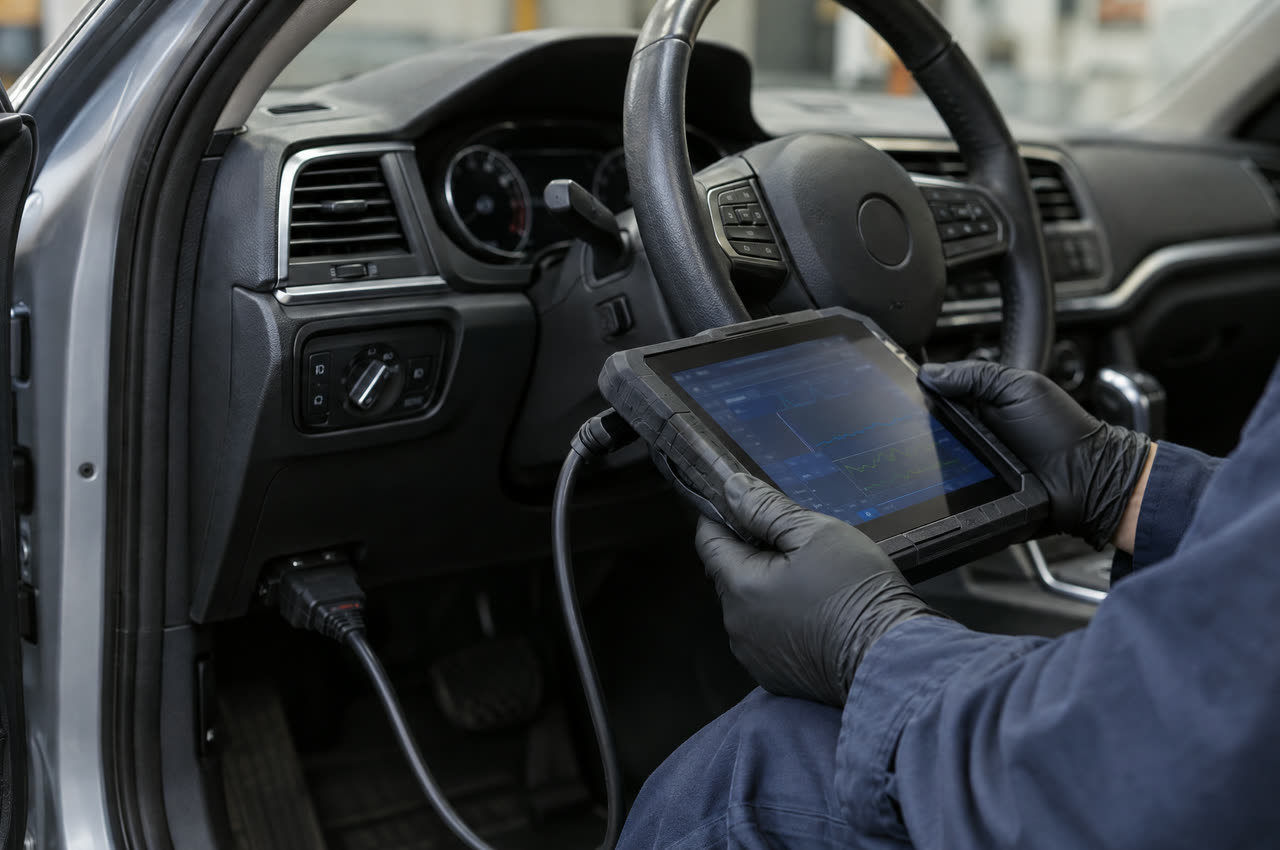
Engine problems are easy to guess at and expensive to guess wrong. A rough idle can be a spark plug, an ignition coil, a vacuum leak, a clogged injector or low compression in one cylinder, and each one is a different repair. So engine work starts with finding the cause, and that starts with a computer scan, posted at $50 before tax.
The scan reads stored and pending codes, the live data from the sensors and, on many cars, a misfire count for each cylinder. That narrows the list. From there the next step depends on what the data shows, such as swapping a coil to another cylinder to see if the misfire follows it, a compression test, a cooling system pressure test or a smoke test for vacuum leaks.
There is no posted price for engine repair, because it can mean anything from a single ignition coil to an engine replacement. You get the cause and the price before any work starts.
Misfires and rough running
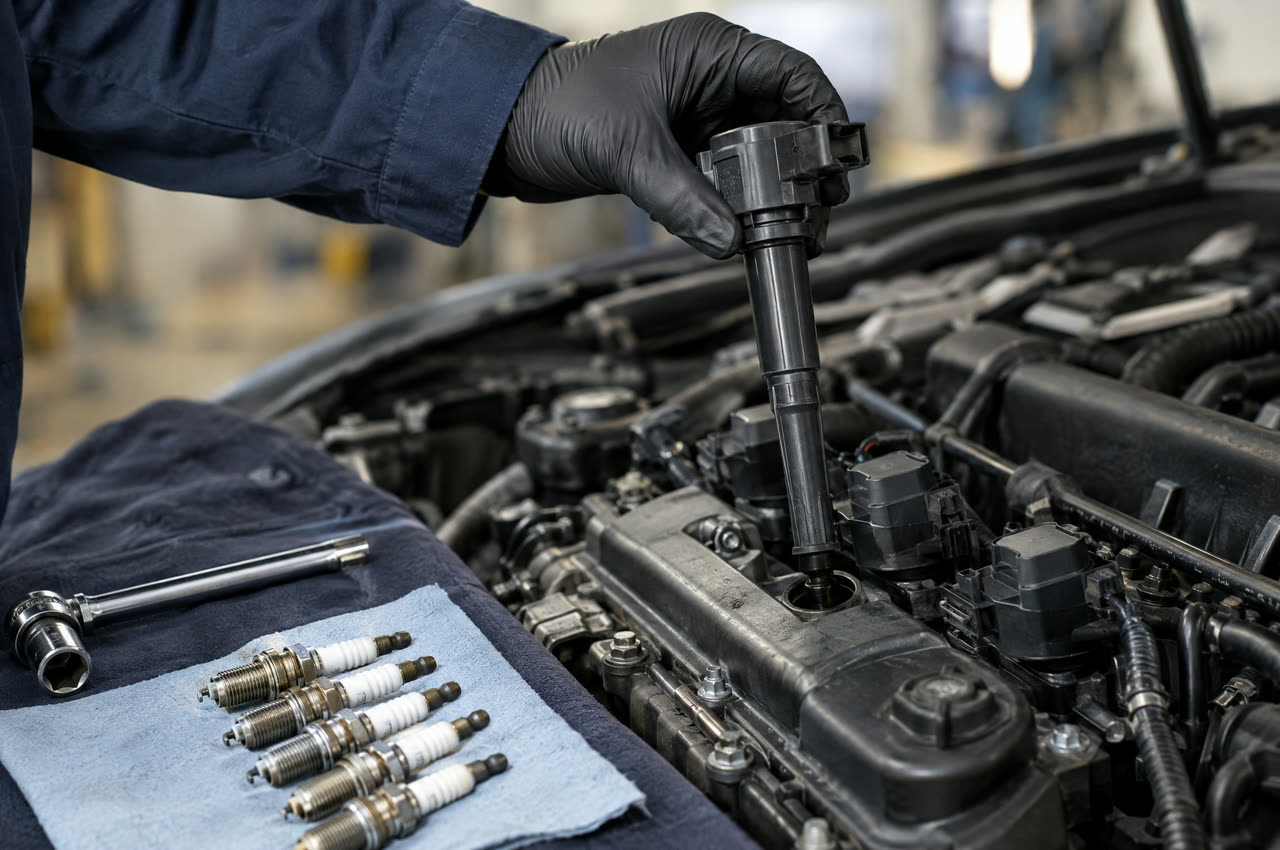
A misfire feels like a stumble, a shake at idle or a hesitation when you accelerate up the ramp onto the 417. On most cars today each cylinder has its own ignition coil, and coils and spark plugs are the most common causes. Worn plugs make the coil work harder, so a failed coil is often the result of plugs left too long.
Other causes include injectors that stick or leak, vacuum leaks from cracked hoses or an intake gasket, and on some direct injection engines, carbon buildup on the intake valves. Cold weather makes many of these worse. A misfire that only happens for the first few minutes on a minus 20 morning is a useful clue, so mention it when you book.
A flashing check engine light means a severe misfire. Ease off, avoid hard acceleration and get the car checked soon. Unburned fuel overheats the catalytic converter, and a ruined converter turns a coil replacement into a much bigger bill. The check engine light page goes into what the codes mean.
Oil leaks
Almost every engine leaks eventually. The common spots are the valve cover gasket on top of the engine, the oil pan gasket and drain plug underneath, the front and rear crankshaft seals, the oil filter housing and the oil cooler lines. Ottawa winters add rust to the list. Steel oil pans and their bolts corrode from salt, and a pan can start seeping through a rusted spot rather than at the gasket.
A burning oil smell after a drive usually means a leak from the top of the engine is landing on the exhaust manifold. Blue smoke from the tailpipe on startup is different. That is oil getting past valve seals or piston rings and burning inside the engine. Finding the source sometimes means cleaning the engine and adding a dye to the oil so the leak shows up clearly.
Overheating and coolant loss
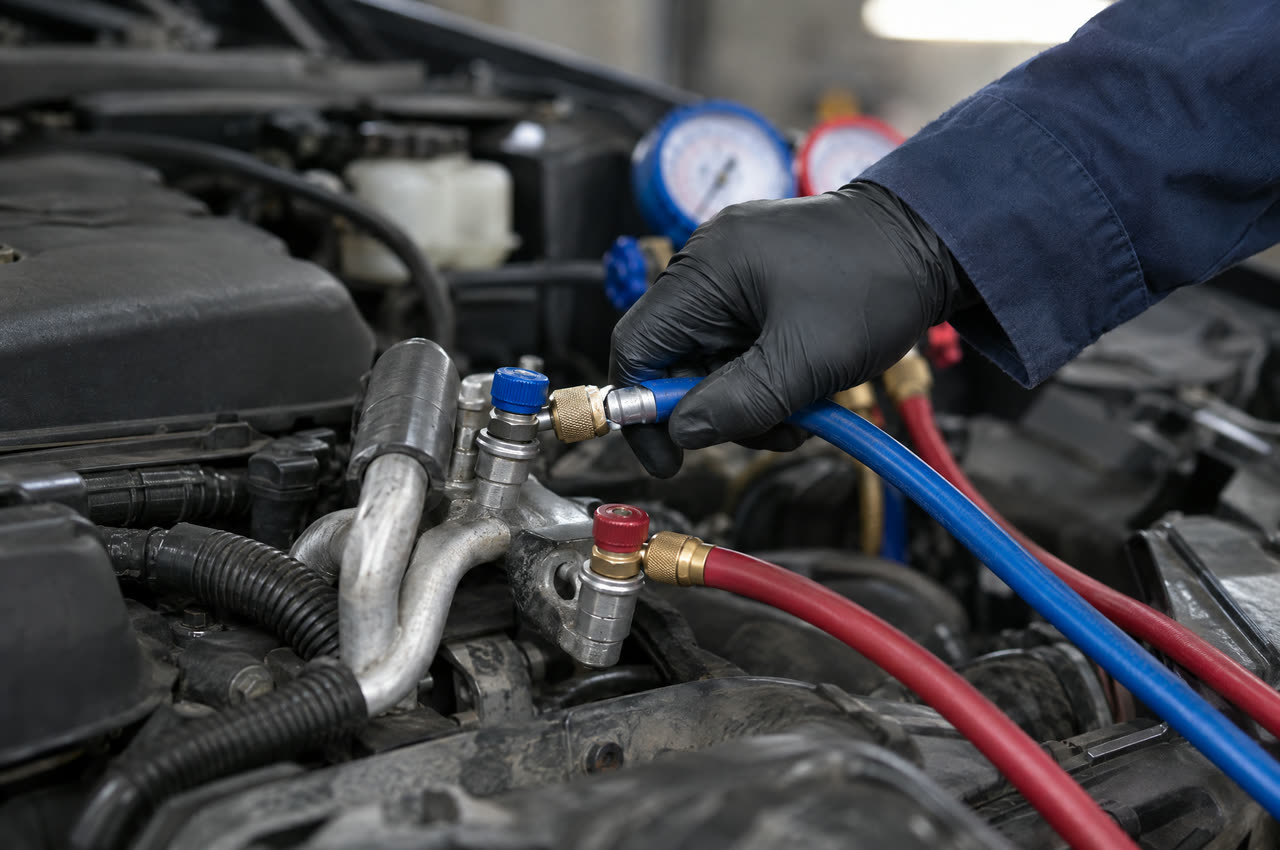
An engine that runs hot needs attention before anything else. The common causes are low coolant from a leak, a stuck thermostat, a failed water pump, a radiator plugged inside or out, a cooling fan that does not switch on, and, less often, a failed head gasket. In summer, a fan problem shows up in stop and go traffic on Innes Road and clears once you are moving.
If the gauge climbs, pull over and turn the engine off. Do not open the radiator cap on a hot engine. Coolant loss and heater problems often go together, so a car that has lost its heat may be telling you about the cooling system too. See no heat and heater repair for that side of it.
Noises from the engine
A light tick that is loudest on a cold start can be a valve lifter waiting for oil pressure, or an exhaust manifold leak that seals as the metal warms. A rattle for the first second or two after starting on some engines is a timing chain tensioner losing pressure overnight. A deep knock that gets louder with engine speed is serious and is usually a bearing. A squeal under the hood on a cold morning is most often the drive belt or a tensioner.
Low oil causes a lot of noise. Check the dipstick before you book, and tell us what you found.
Timing belts and chains
Engines with a timing belt have a replacement interval in kilometres and years, listed in the owner’s manual. On many engines a broken belt means bent valves, so it pays to replace it on time, often with the water pump while everything is apart. Timing chains are meant to last much longer, but they can stretch, especially on engines that went long between oil changes, which is one more reason to keep up with the tune up and yearly maintenance.
Getting the car to Star Top Road
The shop is at Unit 1, 1541 Star Top Road in Ottawa, ON, beside Highway 417 Exit 112. If the engine will not run or you have been told not to drive the car, note that the shop does not tow. Arrange a tow to 1541 Star Top Road and call (613) 744-1521 first so the shop knows it is coming.
For a car that still drives, book online and choose the scan or the option that fits best, then describe what the engine is doing, when it started and any warning lights. Drop offs are taken until 2pm.
Questions people ask
How much does engine repair cost in Ottawa?
There is no single price, because engine repair covers everything from an ignition coil to a head gasket. At SA Auto Repair diagnosis starts with the $50 computer scan, and every repair is quoted for your car once the cause is known. You get the price before any parts are ordered.
What does a flashing check engine light mean?
A flashing light means the engine is misfiring badly enough to damage the catalytic converter. Unburned fuel goes into the exhaust and overheats the converter. Slow down, avoid hard acceleration and get the car looked at as soon as you can, rather than driving on for days.
Can I drive with an engine oil leak?
A slow seep that leaves a few drops on the driveway can usually wait a short while if you keep the oil level topped up. A leak that drips onto the exhaust can smoke and smell, and a fast leak can drain the engine and destroy it. Check the dipstick often and have the source found before it gets worse.
What are the signs of a blown head gasket?
Common signs are coolant loss with no visible leak, white exhaust smoke that smells sweet, bubbles in the coolant reservoir, overheating, and milky residue under the oil cap. Some of these can have other causes, so a cooling system pressure test or a combustion gas test is used to confirm it before the engine is opened.
Is it worth repairing the engine in an older car?
It depends on the repair and on the rest of the car. A leaking valve cover gasket on a car with a solid body is worth fixing. A major internal repair on a car with a rotten frame may not be. Once the cause is known, you get the price so you can weigh it against what the car is worth to you.