
Synthetic vs regular oil
How synthetic and regular oil actually differ, why it matters at minus 25, which engines leave you no choice, and how to tell what yours needs.
What the difference actually is
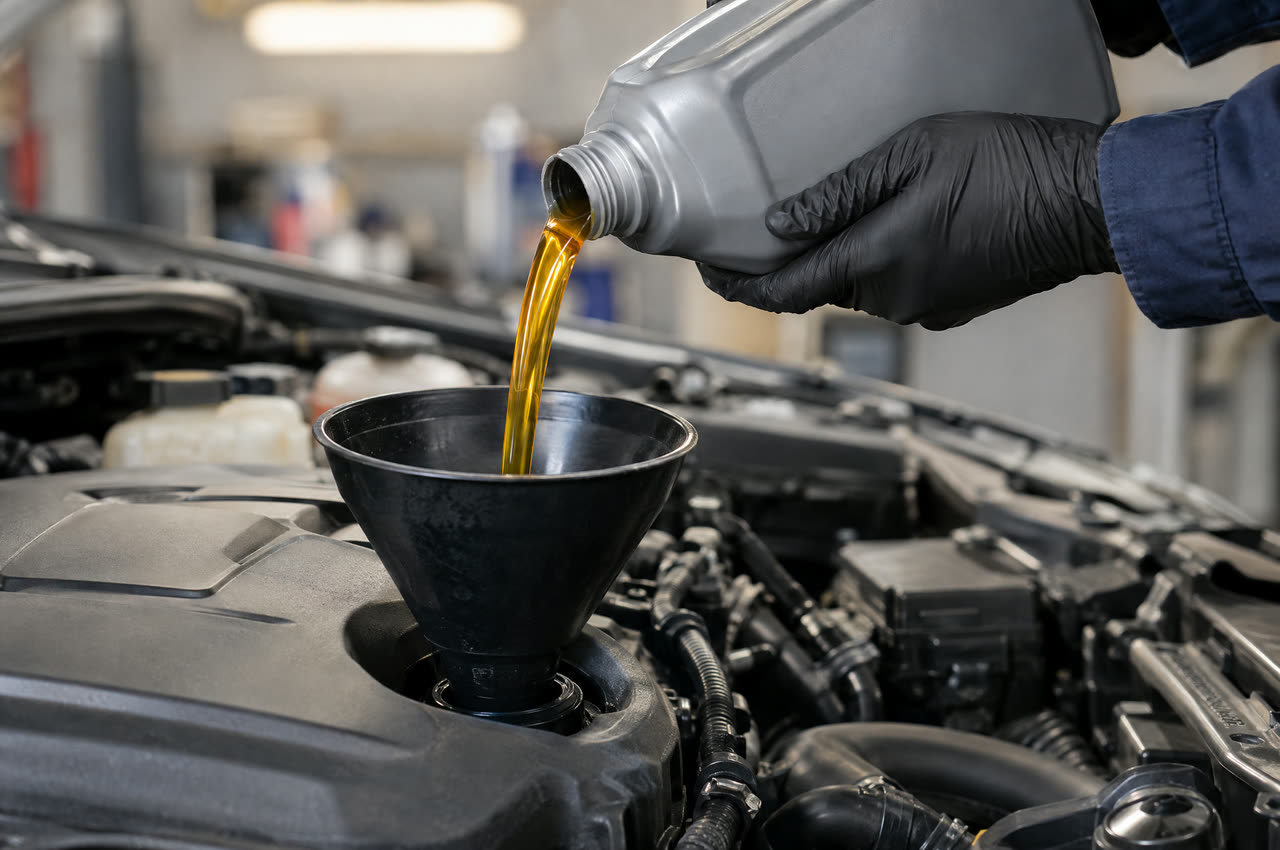
Regular oil, also called conventional or mineral oil, is refined from crude. Its molecules come in a wide mix of sizes and shapes, with some impurities the refining cannot take out. It works well within its range and has lubricated engines for a long time.
Synthetic oil is built from base stocks that are much more uniform. Because the molecules are similar in size, it flows more predictably in the cold and holds together better when hot. It also tends to carry a stronger additive package.
Synthetic blends sit in the middle, a mix of the two. They cost less than full synthetic and do better than regular in the cold, but they are not a substitute when an engine specifically calls for full synthetic.
Why cold starts matter here
The numbers on a bottle, like 5W-30, describe how the oil flows. The first number, with the W for winter, is how it behaves cold. The lower it is, the easier it flows when the engine is frozen. The second number is its thickness at operating temperature.
At minus 25 in an Ottawa driveway, every oil is thick. The question is how fast it gets from the pan to the bearings, cam and turbo once the engine fires. A lot of engine wear happens in those first seconds after a cold start. A synthetic 0W oil gets there sooner than a regular 5W or 10W-30, and that difference is largest on the coldest mornings.
That is also why the starter turns over a little easier on synthetic in deep cold. Thinner oil means less drag.
Which engines require synthetic
For many newer cars, this is not a choice. Look at the owner’s manual or the oil filler cap.
- If it calls for 0W-20 or 0W-16, the engine was designed around synthetic oil.
- Many small turbocharged engines need synthetic, because the turbo runs very hot and oil that cooks in it leaves deposits.
- Many European makes list their own approval code. Use an oil that carries that exact approval, not just the right viscosity.
If the manual specifies synthetic, putting regular oil in is a false saving. It can shorten the life of the turbo, timing chain and other parts, and if anything goes wrong under the manufacturer’s coverage, the oil records will be looked at.
Older engines that call for 5W-30 or 10W-30 regular oil can run on either. Synthetic gives a bit more margin in the cold. Regular oil changed on time is fine.


How intervals compare
Regular oil has traditionally been changed around every 5,000 km. Synthetic usually allows longer intervals, often set by the car’s oil life monitor or the manual.
What most Ottawa drivers miss is the severe service schedule. Manuals usually list it for short trips, extreme cold, stop and go traffic, dusty roads and towing. A winter of ten minute drives to the O-Train station or crawling along Innes Road at rush hour fits that description. Short trips never let the engine get hot enough to boil off moisture and fuel, so the oil gets diluted and breaks down sooner than the kilometres suggest.
Whatever the type, change it at least once a year even if you barely drive. Oil ages in the engine whether the car moves or not.
Mixing and switching
You can switch from regular to synthetic, or back, at any oil change. They are compatible, and switching does not damage seals in a healthy engine. Topping up a synthetic engine with a litre of regular between changes will not hurt it in an emergency either, though it dilutes the benefit.
The old idea that synthetic causes leaks comes from early synthetics decades ago. An engine that already has worn seals may seep a bit more on thinner oil, but the oil did not create that leak.
What it costs here
At SA Auto Repair, a regular oil change is $55 and a synthetic oil change starts at $100, both before tax. The synthetic price is a starting price, and the final number depends on what your engine takes.
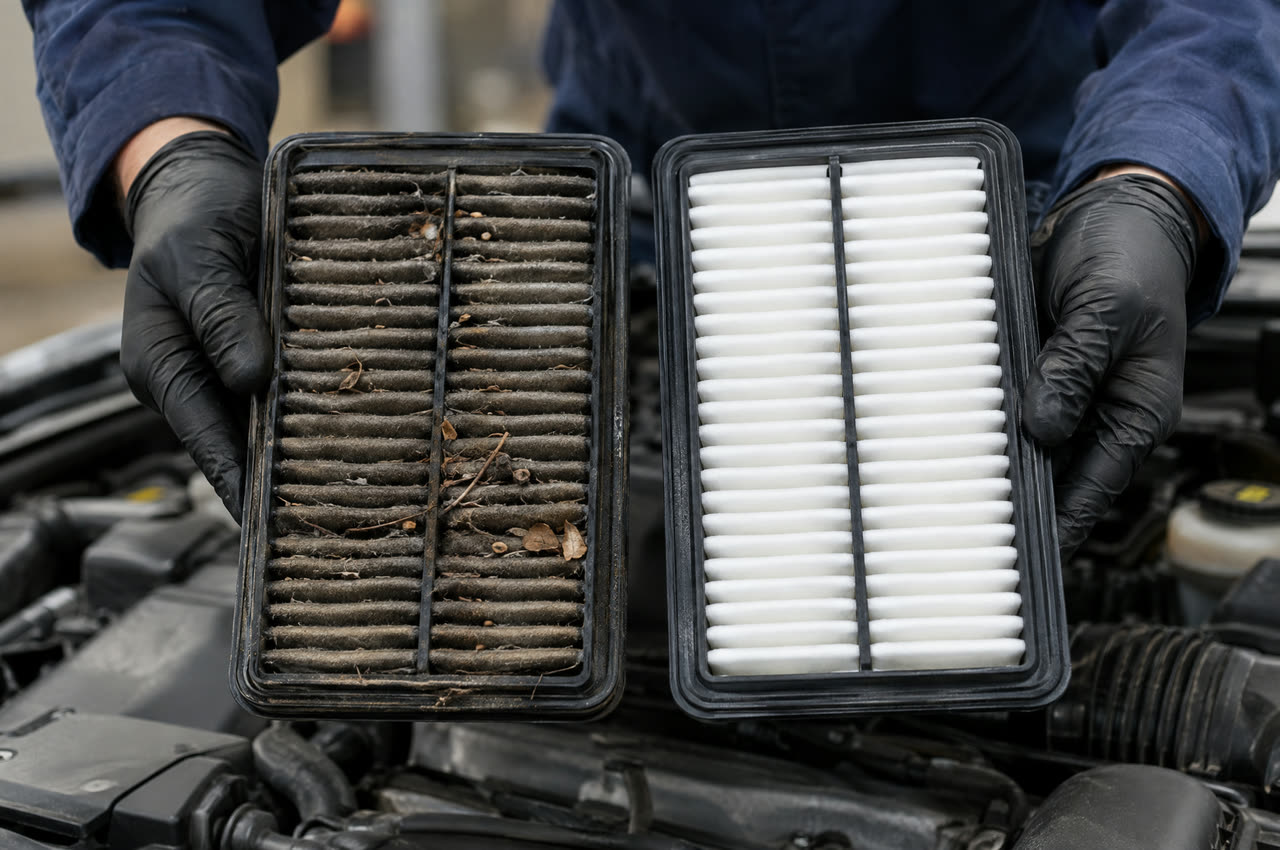
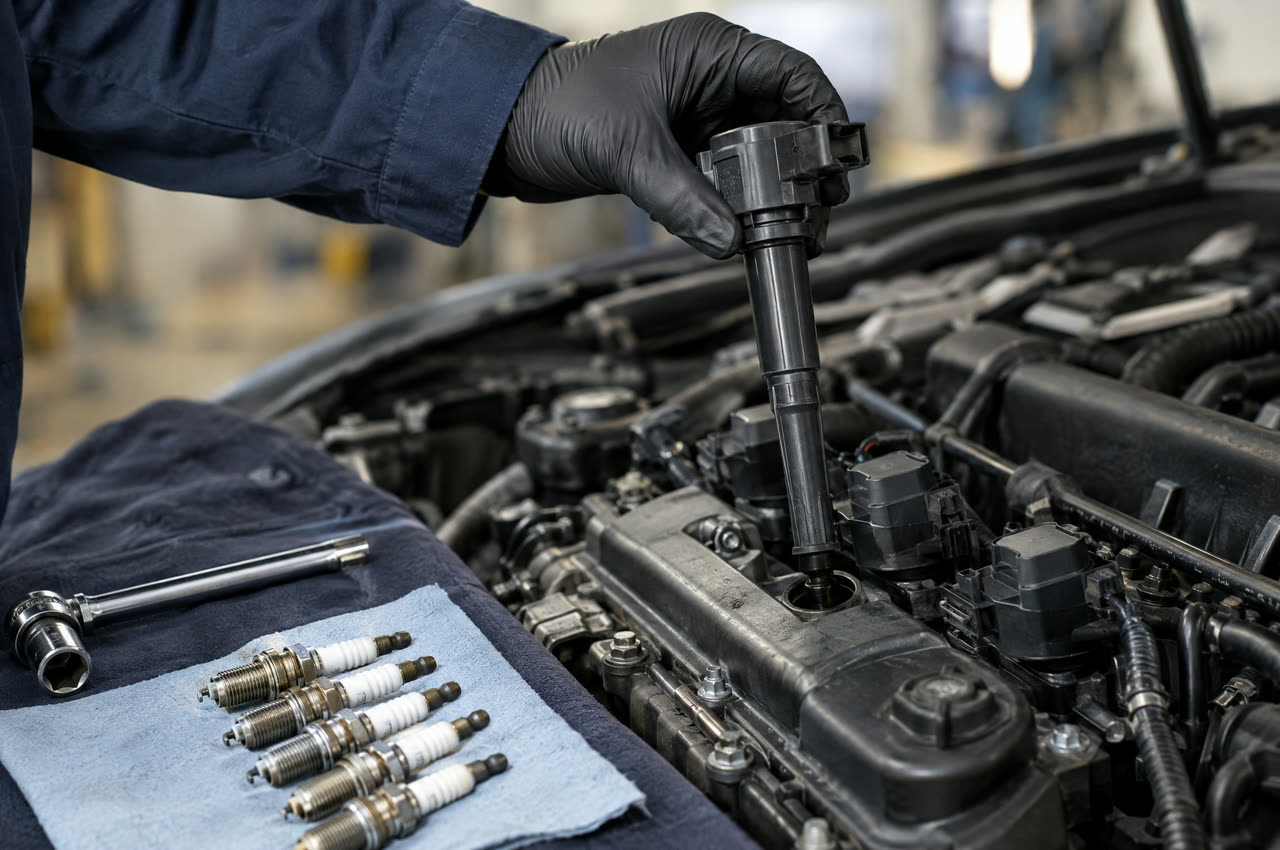
While the car is up, it is worth a look at the underside for leaks, worn parts and rust. More on what is included is on the oil change page. If your car is due for filters, plugs and fluids too, the yearly tune up at $150 covers more ground in one visit. If you are seeing oil on the driveway or burning oil between changes, mention it, since that can be a sign of something that needs engine repair.
Getting it booked
We are at Unit 1, 1541 Star Top Road, Ottawa, Ontario, just off Highway 417 Exit 112 at Innes Road. Book online any time, choose regular or synthetic, and add your year, make and model or scan the VIN with your phone. If you are not sure which oil your car takes, say so in the description and we will check before it goes in.
Questions people ask
Is synthetic oil better than regular oil?
Synthetic flows better when cold, resists breaking down at high temperature and stays in grade longer. Regular oil still does the job in engines designed for it if it is changed on time. The real question is what your engine specifies, which is in the owner's manual or on the oil cap.
Can I switch from regular to synthetic oil?
Yes. Synthetic and regular oils are compatible, and switching in either direction does not harm a healthy engine. Use the viscosity and specification your manual lists, whichever type you choose.
Which cars need synthetic oil?
Most engines that call for 0W-20 or 0W-16 oil, many turbocharged engines and many European cars are designed around synthetic, and the manual will say so. Putting regular oil in those engines can shorten its life and cause problems. If the manual names a specific oil approval, use an oil that carries it.
How often should I change synthetic oil?
Follow your car's maintenance schedule or oil life monitor. Many owners in Ottawa should use the severe service schedule, because short trips in the cold and stop and go traffic are hard on oil. Changing at least once a year is a sensible floor even if you drive very little.
How much is an oil change at SA Auto Repair?
A regular oil change is $55 and a synthetic oil change starts at $100, both before tax. You can book either online any time, including Saturday mornings.
Related work
Book a time that suits you
Pick a time on the booking page whenever it suits you, describe what the car is doing and add a few photos. Drop it off by 2pm on the day you picked.