Why the A/C stopped blowing cold
A car’s A/C is a sealed loop. Refrigerant does not get used up like oil or washer fluid, so if the system is low, it leaked somewhere. On Ottawa cars the condenser is a common culprit. It sits right at the front, ahead of the radiator, where it takes every stone thrown up on the 417 and every splash of salty slush. Corrosion and small punctures there leak slowly until one hot day in June the air comes out warm.
Other leaks show up at the O-ring seals where lines join, the service ports, the compressor shaft seal, and the evaporator buried inside the dash. Not every warm A/C is a leak, though. The compressor clutch might not be engaging because of a blown fuse, a failed relay or a pressure switch. The cooling fan might not be running, so the system overheats in stop and go traffic on Innes Road and cools fine on the highway. Or a blend door inside the dash is stuck on the heat side, which is a heater problem as much as an A/C one.
Recharge or repair
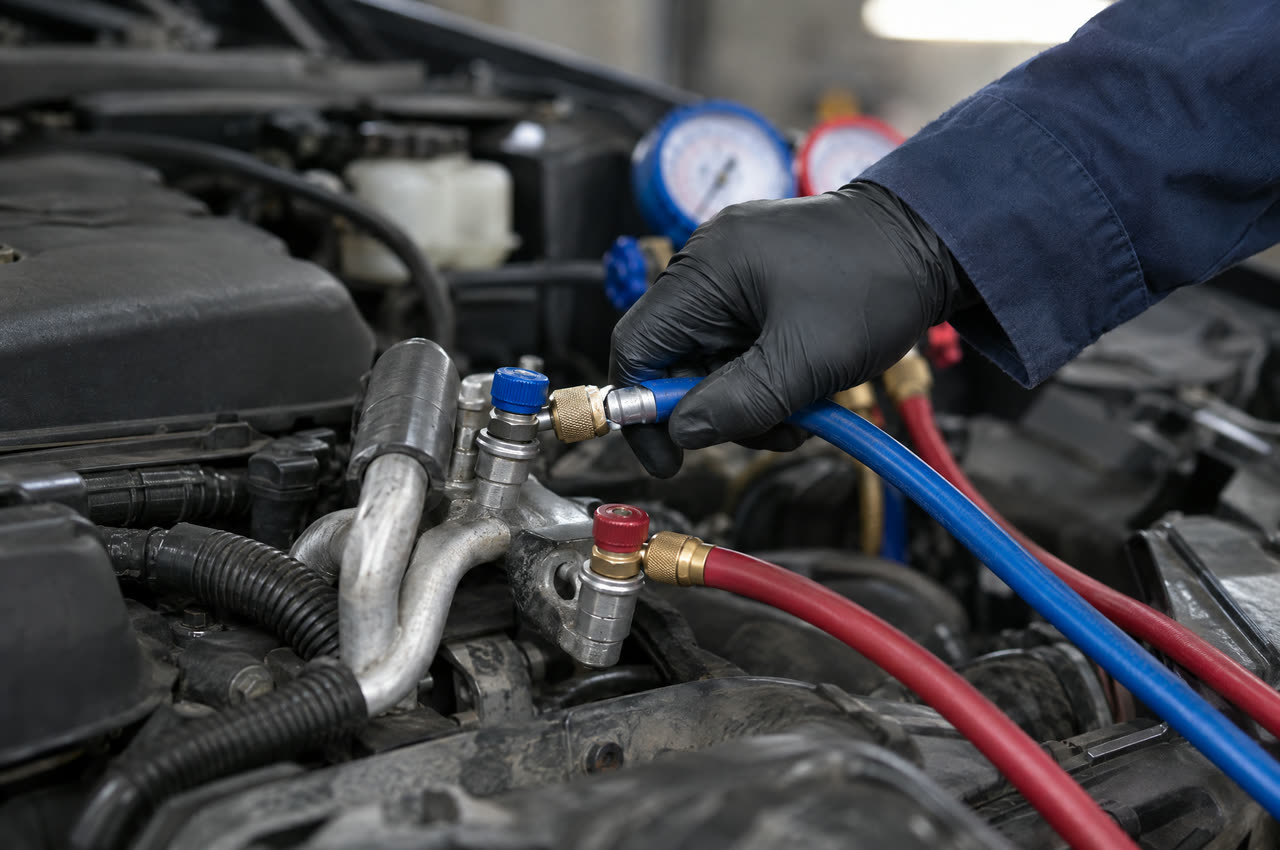
A recharge without finding the leak usually buys anywhere from a week to a season. The honest way to do it is to check the system first. Gauges on the high and low side service ports show the pressures with the engine running, which tells a lot about whether it is low, overcharged, or has a compressor or airflow problem.
If it is low, UV dye goes in with a charge so the leak shows up under a light. A system that has been opened is pulled into a vacuum before charging, to boil off moisture and confirm it holds, then filled with the exact weight of refrigerant on the label. Too much is as bad as too little.
If you used a store bought recharge can, tell us. Many contain a sealer that can clog the parts of the system with the smallest passages, and some contain a different refrigerant blend, which matters before anything is hooked up to the system.
R-134a and R-1234yf
Most cars built before the mid 2010s use R-134a. Most newer cars, depending on the make, switched to R-1234yf, which costs a lot more per kilogram. The type and the charge weight are on a label under the hood. The two cannot be mixed, and the equipment used for one is not used for the other.
Snap a photo of that label and add it to your booking. It tells us what the car needs before you arrive.
Your A/C matters in winter too
Most people think about the A/C in July, but it works hard in Ottawa winters too. On defrost, the compressor dries the air before the heater warms it, which is what clears a fogged windshield on a wet November morning. If the A/C has quit, the inside of the glass fogs more and clears more slowly, which is a real problem in slush with the wipers going.
Running the A/C now and then through the cold months also keeps oil moving through the compressor and keeps the seals from drying out. Most compressors will not engage when it is well below freezing outside, which is normal.
Smells and weak airflow
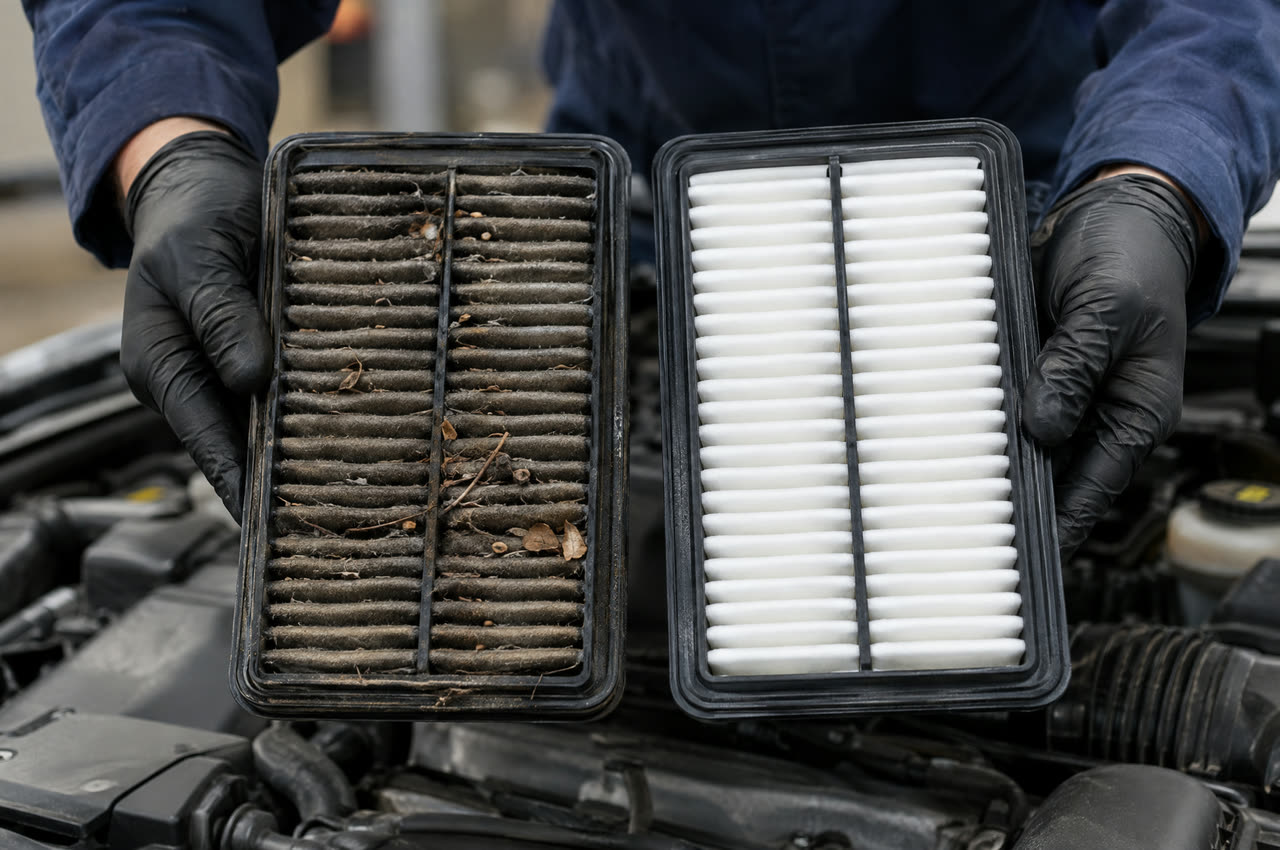
A musty, wet sock smell when you first turn the fan on usually comes from moisture and growth on the evaporator. A dirty cabin air filter makes it worse and also cuts airflow to a trickle. Cabin filters are cheap and easy to forget, and they fit nicely into a yearly tune up.
If the air is cold but barely coming out, or only works on the highest setting, the problem is airflow, not refrigerant. That points at the blower motor, its resistor or control module, or a clogged filter. If a warning has come up on the dash with the A/C problem, a computer scan reads what the climate control module has stored.
What to tell us when you book
- When it went warm, and whether it faded slowly over weeks or quit all at once.
- Any noise when the A/C is switched on, such as a grind, squeal or rattle from the engine.
- Whether anyone has added refrigerant or sealer in the past.
- A photo of the A/C label under the hood.
A/C repair has no posted price at Unit 1, 1541 Star Top Road, Ottawa, ON, because it depends on what has failed and the refrigerant type. You get a diagnosis and a price before any part is replaced. Book online any time and choose A/C repair, and drop off by 2pm.
Questions people ask
How much does car A/C repair cost in Ottawa?
It depends on what is wrong and on the refrigerant your car uses. A leaking O-ring is a small job, while a condenser or compressor is a much bigger one. At SA Auto Repair, A/C work is quoted per car once the system has been checked, before anything is replaced.
Why is my car A/C blowing warm air?
The most common cause is low refrigerant from a leak, often at the condenser in front of the radiator. Other causes are a compressor that is not engaging because of a fuse, relay or pressure switch, a cooling fan that is not running, or a blend door stuck on the heat side. Gauges on the system show which one it is.
Can I just recharge my car A/C?
You can, but if it was low, it leaked, and the new charge will leak out too. A recharge without finding the leak might last a season or a week. Adding dye with the charge, or testing for the leak first, saves paying for refrigerant twice.
Why does my car A/C turn on in defrost mode in winter?
The A/C compressor dries the air before it is heated, which is what clears a fogged windshield quickly. Most cars run it automatically on defrost. If the A/C is not working, the windows will fog up more and take longer to clear on wet fall and winter mornings.
What refrigerant does my car use?
Most cars built before the mid 2010s use R-134a, and most newer ones use R-1234yf. The label under the hood, usually on the radiator support or the underside of the hood, says which one and how much. The two are not interchangeable and must not be mixed.