What Ottawa roads do to a suspension
Every spring the freeze thaw cycle opens up potholes across the city, and the worst of them sit on roads everybody uses: Innes Road, the ramps on and off the 417, the side streets in the industrial parks. Each hit sends a jolt through the tire into the suspension, and the parts that soak it up wear a bit more each time.
Salt does its share too. Coil springs rust through their coating and can snap, often on a cold morning when the steel is at its most brittle. Ball joint and tie rod boots crack, salty water gets in, and the joint wears from the inside. Rubber bushings harden in the cold and split. By the time a car has seen a few Ottawa winters, the suspension usually has something worn, even if it still drives fine.
Noises and what they usually mean
The sound and when you hear it narrow things down quickly:
- A clunk over small bumps at low speed is most often a sway bar link. It is the most common suspension noise we hear about.
- A knock or pop when turning the wheel in a parking lot points at the strut mounts at the top of the front struts.
- A creak like an old door when going over speed bumps on a cold day is often a dry ball joint or a hardened bushing.
- A bang from one corner after a big pothole can be a broken coil spring. You may see the car sitting lower on that corner.
- Wandering on the highway, or a steering wheel that feels loose in the middle, usually means worn tie rod ends or ball joints.
The feel matters as much as the noise. If the car keeps bobbing after a dip, floats on the 174 at highway speed, or the nose dives hard when you brake, the shocks or struts are not controlling the springs any more. Worn dampers also make the tires bounce slightly on rough pavement, which leaves a scalloped, cupped wear pattern you can feel by running a hand over the tread.
Shocks and struts are not the same part
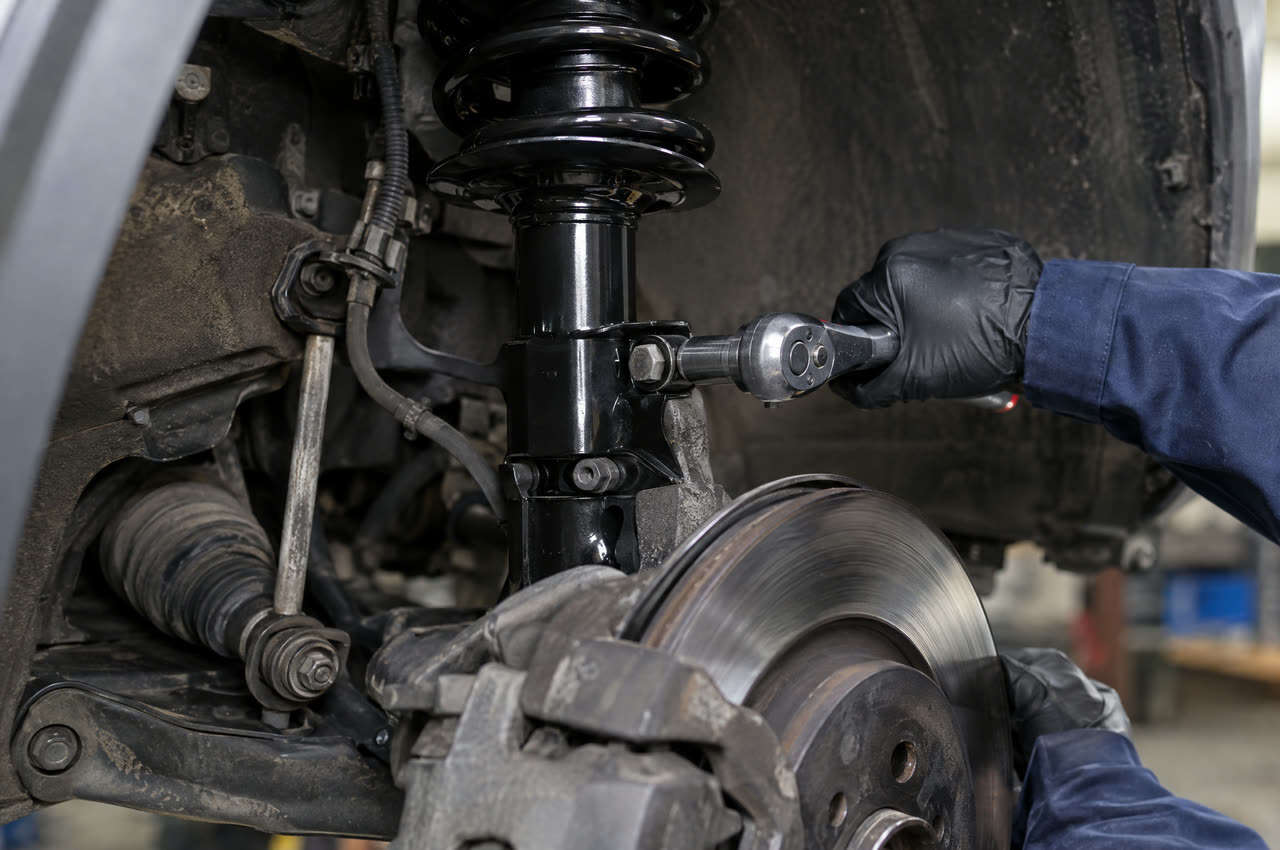
A shock absorber only controls how the spring moves. A strut does that job too, but it is also part of the structure. It holds the coil spring, carries the weight of that corner and sets the angle of the wheel. Most cars have struts at the front, and many have shocks at the rear.
Struts can be replaced as a bare strut, which means taking the spring off the old one and moving it over, or as a complete assembly with a new spring, mount and boot already fitted. On a car with a few salted winters behind it, the complete assembly often makes more sense, because the old spring and mount are rusted and tired anyway. Either way, they go in pairs on the same axle.
How the suspension gets checked
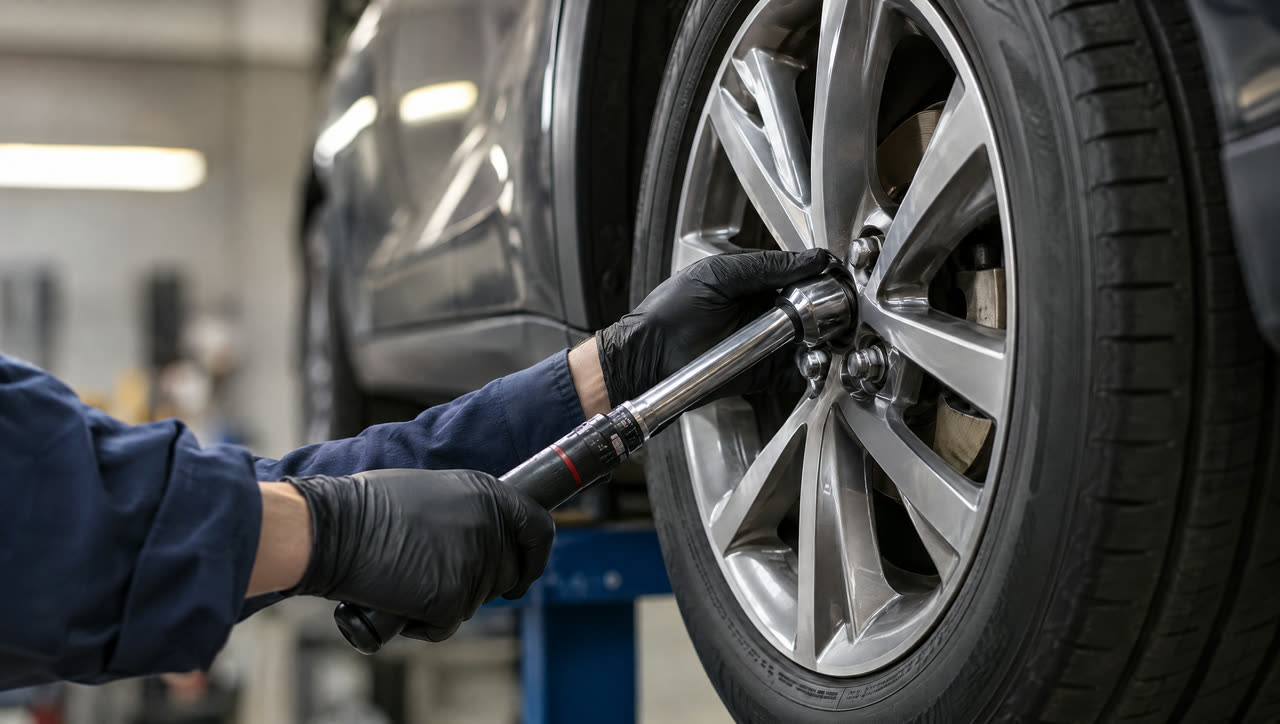
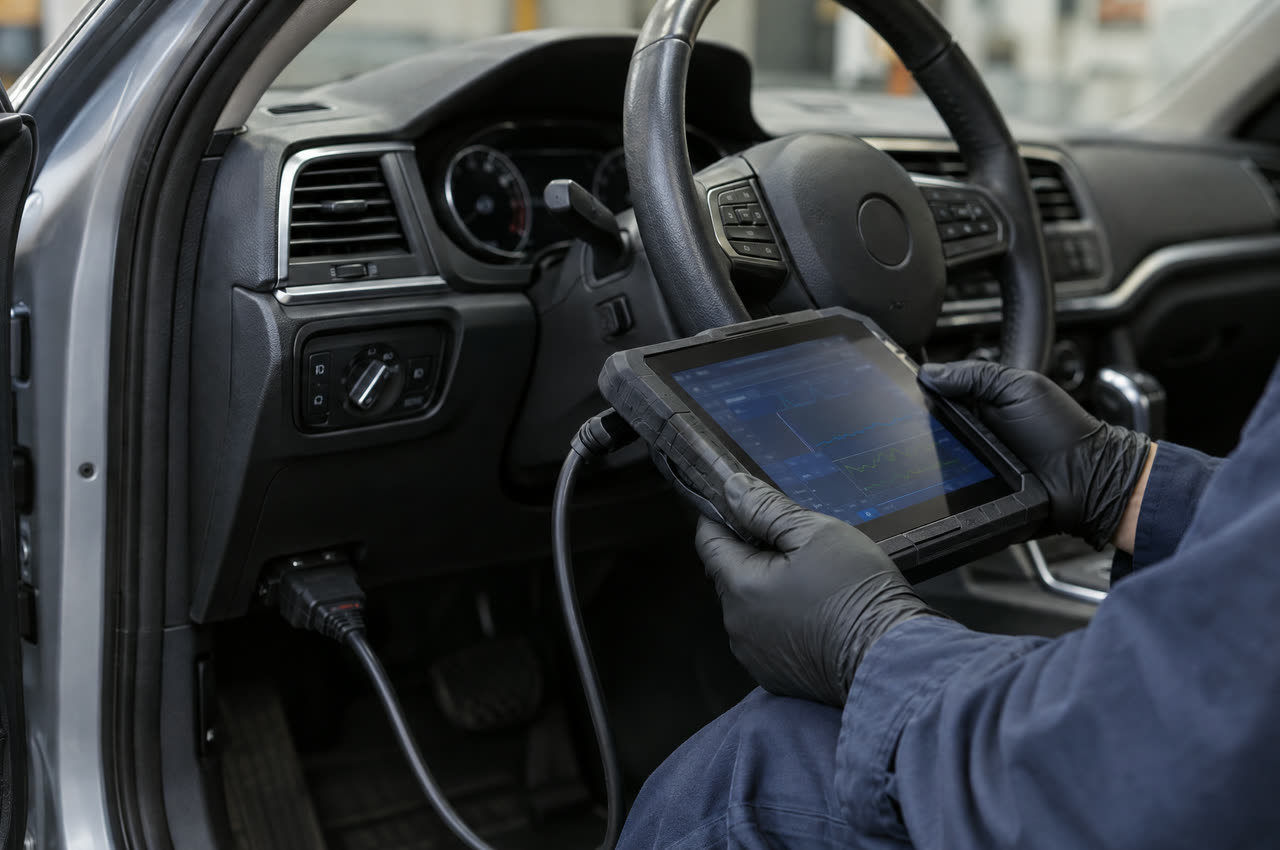
It starts with a short drive on rough pavement to hear the noise for ourselves. Then, with the weight off the wheels, each joint is checked for play by prying and rocking it: ball joints, tie rod ends, sway bar links, control arm bushings and wheel bearings. Shock and strut bodies get checked for oil leaking down the outside, springs for cracks and breaks, and boots for tears.
You get a list of what is worn, what is starting to wear, and what can wait, with a price for the parts that matter now. Worn suspension parts are also on the list for an Ontario safety inspection, so if you are selling the car, it is worth knowing about them first.
You will need an alignment afterwards
Replacing struts, tie rod ends or control arms shifts the wheel angles a little, even when everything goes back where it came from. Driving out of alignment chews up the inside or outside edge of the tires within a few thousand kilometres. SA Auto Repair does not have an alignment machine, so alignments are not done in house. Plan to book one at an alignment shop soon after the suspension work, before the tires pay for it.
Some jobs do not affect alignment at all. Sway bar links, rear shocks on many cars and most bushing work leave the wheel angles alone. You will be told up front whether your repair needs one.
Brakes and tires on the same visit
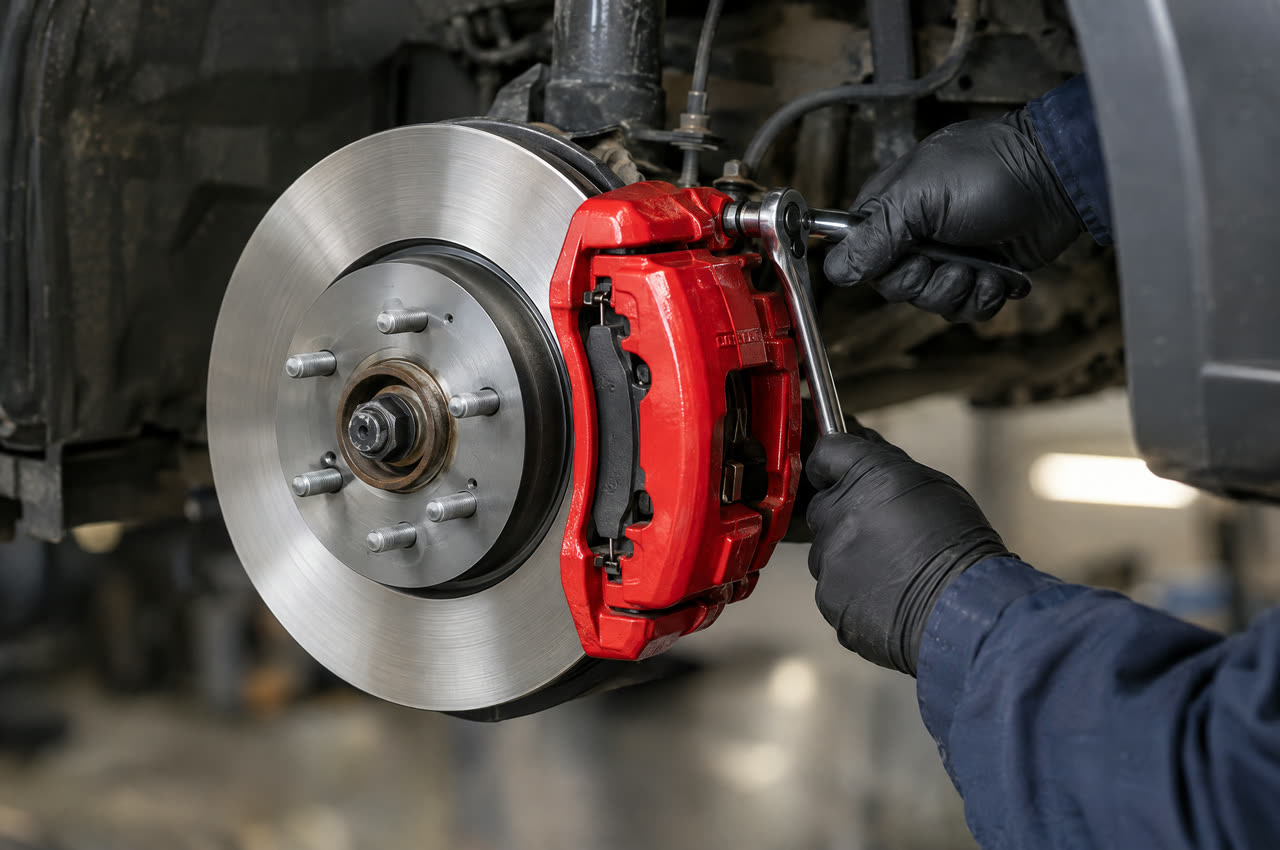
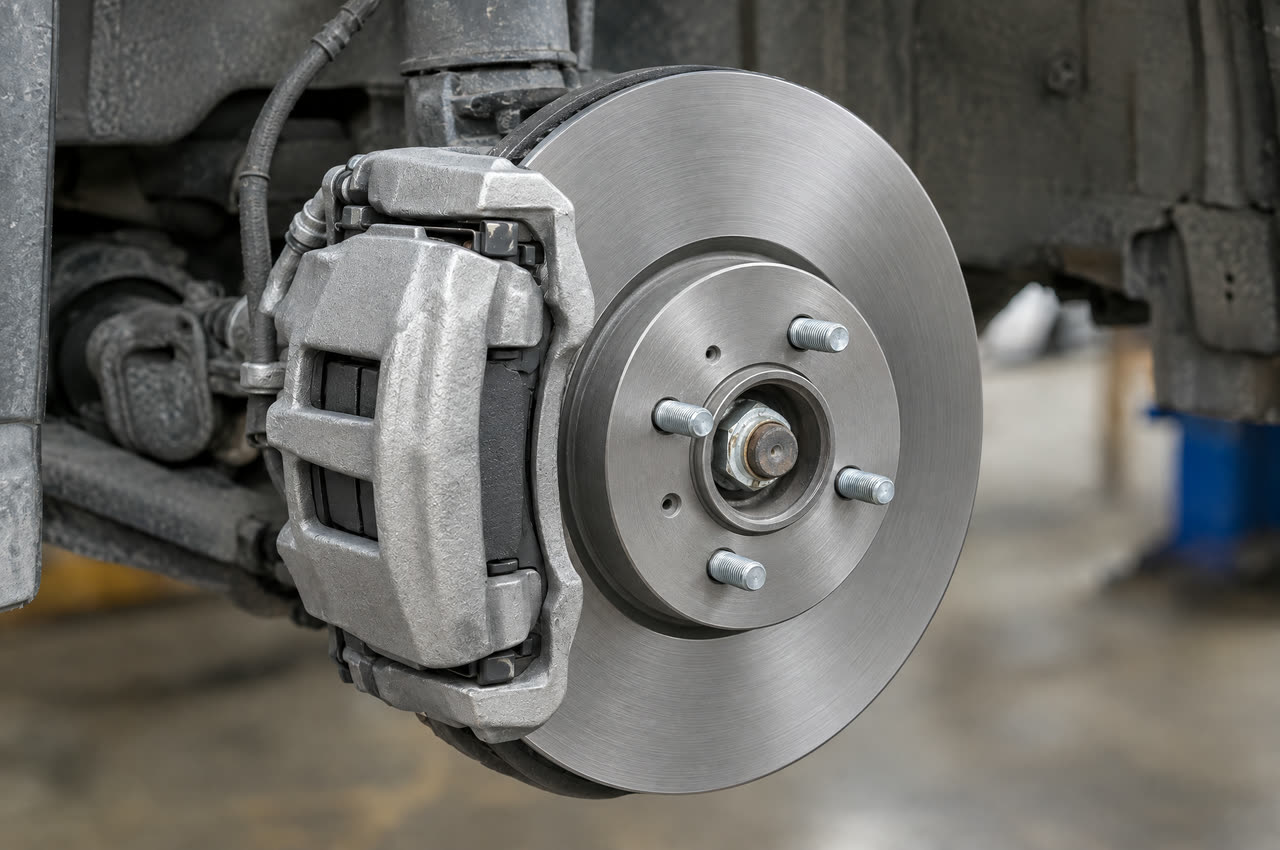
Suspension and brakes share the same corner of the car, so a worn part in one often shows up in the other. Pads worn on one edge can come from a loose ball joint, and a car that pulls under braking can be a brake problem or a suspension one. If something looks off, the brakes get a look while the wheels are off. If a seasonal tire change is due, doing both on the same visit saves taking the wheels off twice.
Price and booking
Suspension work at Unit 1, 1541 Star Top Road, Ottawa, ON has no posted price, because parts and labour depend on the car and on which parts are worn. Parts come in different qualities, and you choose. To get it looked at, book online and choose shocks and suspension, then describe the noise, when it happens and which corner it seems to come from. Drop off by 2pm on weekdays or Saturdays.
Questions people ask
How much does it cost to replace struts in Ottawa?
It depends on the car, whether it is the front or rear, and whether you choose complete strut assemblies or just the strut. At SA Auto Repair, suspension work is quoted per car after the parts are checked, and you get the price before anything is replaced. Budget separately for an alignment afterwards, which is done at an alignment shop.
How do I know if my shocks or struts are worn out?
The car keeps bouncing after a dip, floats or wallows on the highway, dives hard at the nose when you brake, or leans a lot in corners. You may also see oil wetting the outside of a shock body or cupped wear on the tires. A road test and a look underneath confirm it.
What is the clunking noise when I go over bumps?
On most cars the first suspect is a worn sway bar link, a short rod with a ball joint at each end that takes a beating from potholes. Worn control arm bushings, ball joints and strut mounts can clunk too. Finding the exact part means checking each one for play with the weight off the wheels.
Do I need an alignment after replacing struts?
Usually yes. Replacing struts, tie rod ends or control arms changes the wheel angles slightly, and driving out of alignment wears the tires fast. SA Auto Repair does not have an alignment machine, so the alignment is done afterwards at a shop that does them.
Should shocks and struts be replaced in pairs?
Yes. A new strut on one side and a worn one on the other makes the car react differently left to right over bumps and under braking. Replacing both on the same axle keeps the car predictable, even if only one is leaking.