
Pothole damage signs
You hit one hard on the way home. Here is what to look and listen for in the next few days, what each sign usually means, and what can wait.
Why spring is the worst of it
Potholes in Ottawa start with water getting into cracks in the asphalt. It freezes, expands, and pushes the crack wider. When it thaws, the gap is left behind, and traffic breaks the weakened surface into a hole. A winter with lots of swings across zero makes more of them.
That is why March and April are the worst weeks, with a second round in late fall when the freeze thaw starts again. The arterial roads with heavy traffic, and the right lanes of the highways where the trucks run, tend to break up first.
You can report a pothole to the City of Ottawa through 311. If you want to make a claim for damage, look up the City’s process right away, since the notice deadline is short.
Check the tire and rim first
The tire and rim take the hit before anything else, so start there. Pull over somewhere safe or wait until you are home, and look at the wheel that hit.
- A bulge or bubble on the sidewall. A bulge means the tire has internal damage and can blow out without warning. It cannot be repaired. Put the spare on or drive slowly and directly to a shop.
- A cut or gouge in the sidewall, especially one deep enough to show cords.
- A dent or flat spot on the rim lip, inside or outside. A bent lip often leaks air slowly at the bead.
- A tire that is losing pressure over a day or two.
A slow leak from a nail is usually a $20 flat repair. A slow leak from a bent rim is different, because the tire is fine but the rim cannot seal against it. Sometimes the rim can be straightened by a wheel shop. Sometimes it needs replacing.
A pull, or a crooked steering wheel
If the car drifts to one side on a straight, flat road, or the steering wheel sits off centre when you are driving straight, the hit has probably moved the alignment or bent something in the steering.
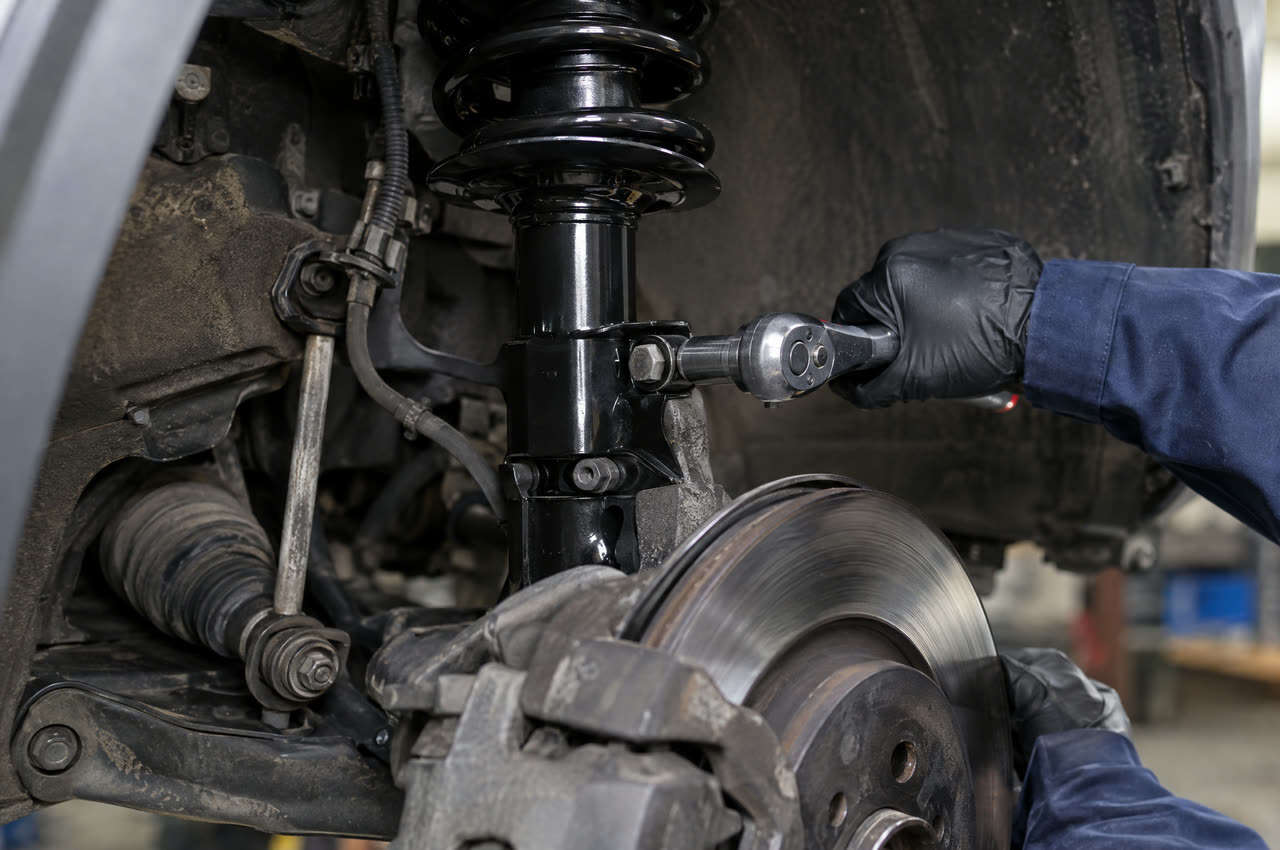
A tie rod, control arm or strut can bend on a hard impact. If something is bent, it has to be replaced. Adjusting the alignment around a bent part just hides it.
SA Auto Repair does not have an alignment machine. We can inspect the suspension and steering, find and replace bent or broken parts, and tell you when the car needs an alignment, but the alignment itself has to be done at an alignment shop. It is worth doing soon, because a car that is out of alignment wears through a set of tires quickly.
Vibration at speed
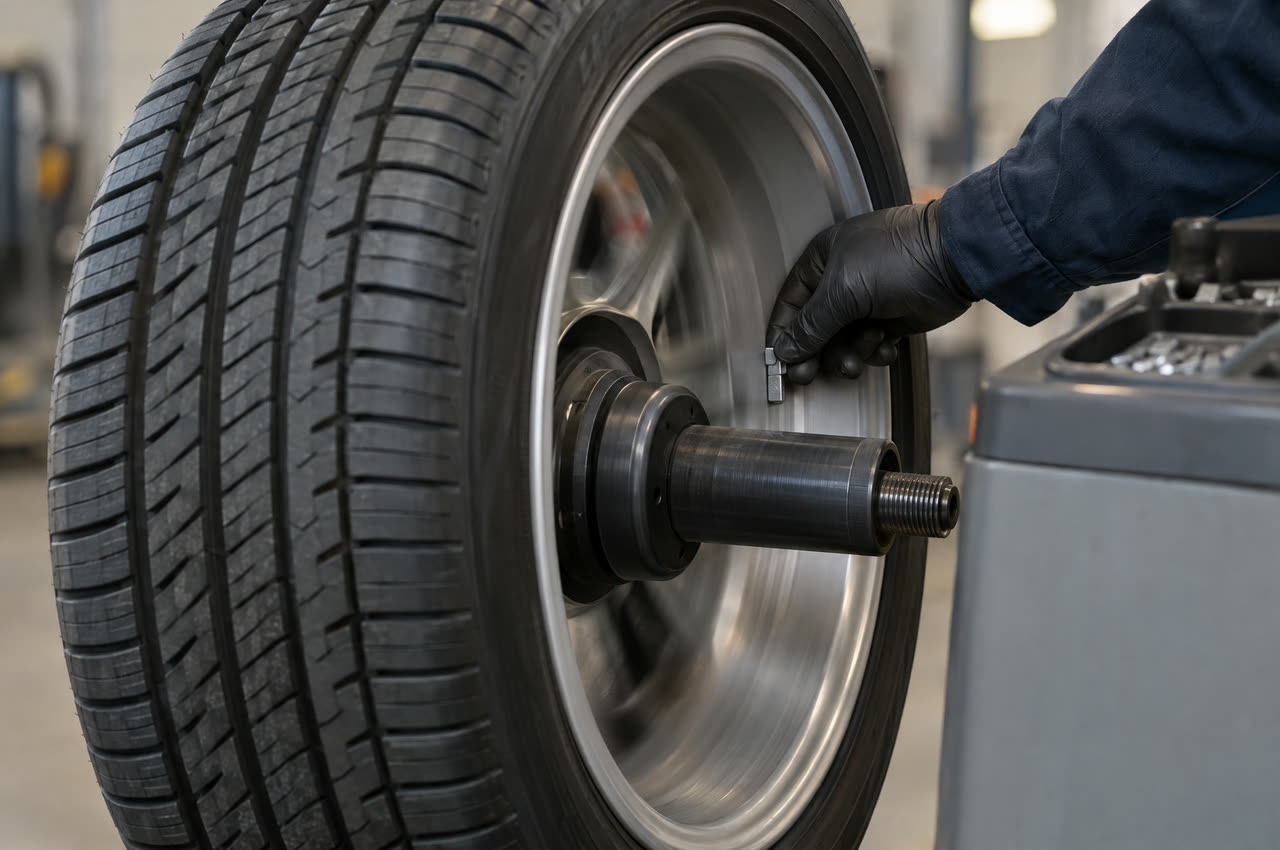
A new vibration after a hit usually comes from the wheel or tire. The common causes are a bent rim, a tire with a broken belt inside it, or a balance weight knocked off the rim.
Balance and rim problems typically show up as a shake through the steering wheel or the seat at highway speeds, often getting worse as you go faster. A tire with a broken belt can also feel lumpy at low speed. Either way, it should be looked at before it does more damage. A vibration you can feel through the brake pedal only when braking is usually a different problem, in the brakes.
New clunks and knocks
Suspension parts take a beating from potholes too. Listen for:
- A clunk or knock from one corner over bumps that was not there before.
- A rattle over rough pavement.
- A bouncy or floaty ride on that corner, or the car leaning more in turns.
- Oil on the side of a shock or strut.
Sway bar links, ball joints, control arm bushings and struts are the usual suspects. A coil spring can also crack, especially on older cars where salt has already been working on it. The shocks, struts and suspension page covers what we check. After front end parts are replaced, you will usually need an alignment afterwards, which we don’t do in house.
Warning lights
A hard hit can trigger a warning light on the dash. The tire pressure light is the most common, because the tire lost air. An ABS or traction control light can come on if a wheel speed sensor or its wire was damaged.
Do not ignore either. Check the tire pressure first. If the pressure is fine and the light stays on, have it scanned.
What you can do yourself
After a hard hit, walk around the car and look at all four tires. Check the pressures with a gauge the next morning, cold. Drive a short stretch of straight road and see whether the steering wheel is straight and the car tracks true.
If everything looks and feels normal, it probably is. Check again in a week, because a slow leak or a bulge can take a few days to show.
If anything has changed, bring the car in. You can book online and describe what happened, and add up to four photos of the tire or rim. The shop is at Unit 1, 1541 Star Top Road, Ottawa, ON, beside Highway 417 Exit 112 at Innes Road. If the tire is not safe to drive on and you have no spare, the shop does not tow, so arrange a tow to the shop or call first.
When the spring comes and the winter set comes off, a tire swap is also a good moment to look at every wheel and tire for winter damage you might have missed.
Questions people ask
How do I know if a pothole damaged my car?
Watch for a pull to one side, a steering wheel that is no longer straight, a new vibration at highway speed, a bulge on a tire sidewall, a slow leak or a new clunk over bumps. Any of those after a hard hit is worth having checked. If the car drives exactly as before, the damage is usually limited to the tire and rim, which you can inspect yourself.
Can a tire with a bulge be repaired?
No. A bulge means the cords inside the sidewall are broken and air is pushing the rubber out. The tire can fail suddenly and has to be replaced. Drive gently on the spare or straight to a shop.
Does hitting a pothole mess up your alignment?
It can. A hard hit can bend a tie rod or control arm or shift the alignment, which shows up as a pull or an off centre steering wheel. Bent parts need to be replaced first, then the car needs an alignment at a shop with an alignment machine.
Why does my car vibrate after hitting a pothole?
The usual causes are a bent rim, a tire with internal damage, or a wheel weight knocked off so the wheel is out of balance. Vibration that shows at highway speed and gets worse as you go faster usually points to a wheel or tire. Have it checked before it wears the tire unevenly.
Related work
Book a time that suits you
Pick a time on the booking page whenever it suits you, describe what the car is doing and add a few photos. Drop it off by 2pm on the day you picked.