What the sound is telling you
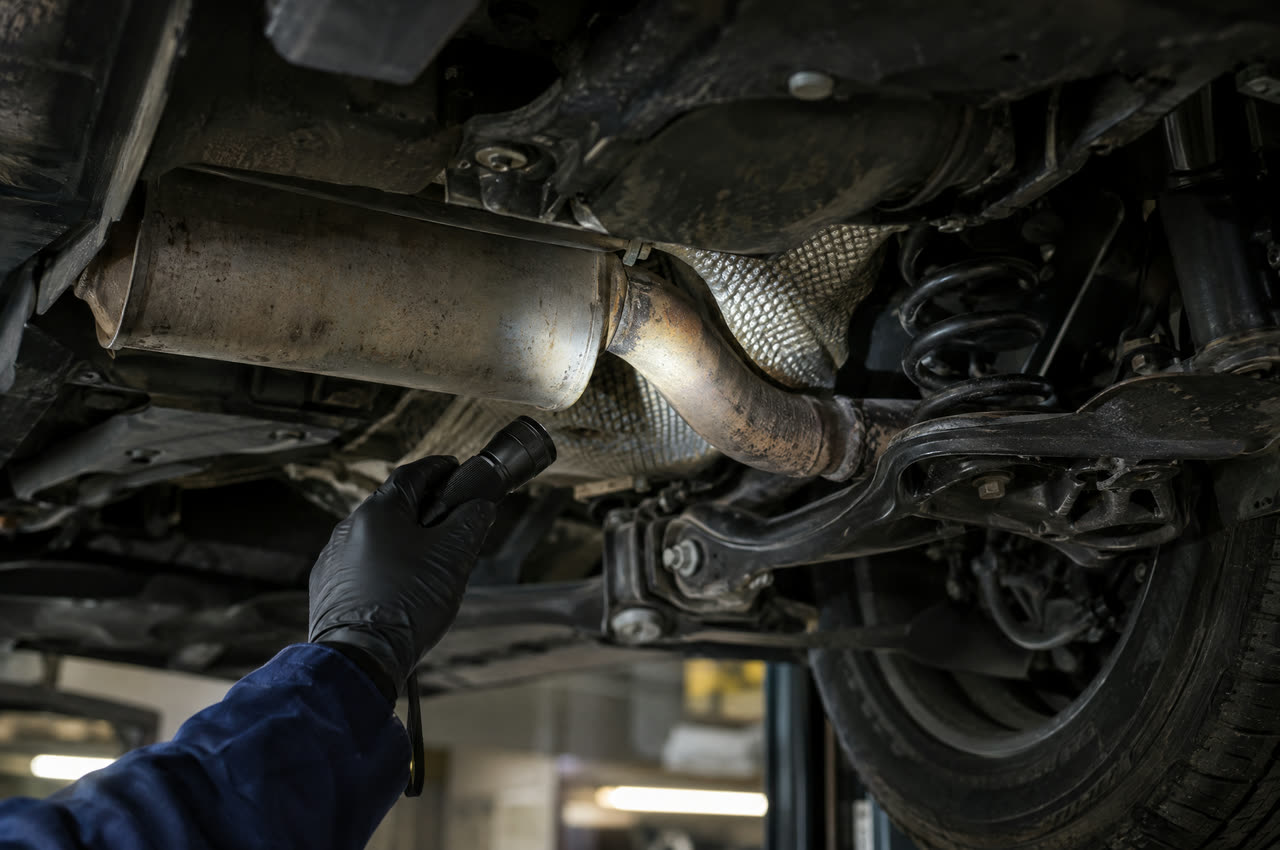
Exhaust problems announce themselves, and the type of noise narrows down where to look. A deep rumble that gets louder as you accelerate usually means a hole in the muffler or a pipe that has rusted through. A tinny rattle at idle, or at one particular engine speed, is most often a loose heat shield. A ticking at cold start that fades as the engine warms up is a classic sign of a leak at the exhaust manifold, either a failed gasket, a broken stud or a cracked manifold that seals up as the metal expands.
A hiss or a puffing sound near the front of the car points to a leak close to the engine. A clunk over bumps can mean a broken hanger has let the pipe drop onto the subframe. When you book, describe what you hear and when you hear it. Cold or warm, idle or under load, and whether it changes over bumps. That saves time once the car is up.
Salt eats exhaust from both sides
Ottawa’s winters are hard on exhaust systems. Road salt and slush hit the outside of the pipes all winter, and the clamps, flanges and hangers are the first things to go. Inside, the system collects water. Burning fuel produces water vapour, and on short trips the exhaust never gets hot enough to boil it off, so it condenses in the muffler and sits there. That is why mufflers often rot from the inside out, starting at the seams and at the low spot where water collects.
Driving habits matter here. A car that mostly does short runs around Gloucester in January will lose its muffler sooner than one that spends an hour a day on the 417, because the longer drive dries the system out. Potholes add to it. A hard hit can crack a rusted pipe or snap a hanger that was already thin.
Heat shields and hangers
Heat shields protect the floor, the fuel tank and the parts underneath from exhaust heat. They are thin and usually held by small clips or welded tabs, and after a few winters those let go and the shield buzzes. Sometimes the right answer is a new clamp. A rattling shield can also be covering something more important, like a crack in a pipe or a converter, so it gets looked at before anything is just tightened up.
The rubber hangers that hold the system in place also wear. When they crack or stretch, the exhaust sags, knocks against the body and puts strain on the joints until a pipe breaks. Replacing hangers is cheap compared with the pipe they eventually take with them.
Carbon monoxide is the real concern
Noise is annoying, but the leak itself is the part to take seriously. Exhaust gas contains carbon monoxide, which has no colour and, on its own, no smell. A leak under the floor, especially ahead of the cabin, can let it inside, and the risk is higher when you sit still in traffic on Innes Road with the heater recirculating.
If you get stuck in a snowbank, clear snow away from the tailpipe before you let the engine idle for long. A blocked tailpipe can push exhaust into the car in minutes. The same goes for idling in a closed garage, even with the door partly open.
The catalytic converter and the check engine light
The catalytic converter sits between the engine and the muffler, with oxygen sensors before and after it. A leak ahead of a sensor lets fresh air into the exhaust, the sensor reads a lean mixture, and the engine computer reacts to a problem that does not exist. That can set fuel trim or oxygen sensor codes, or muddy the picture when a converter efficiency code comes up.
So a check engine light and an exhaust noise often need to be looked at together. Replacing a converter before fixing a leak upstream of it can mean paying for a part that was not the problem. A computer scan for $50 reads the codes and the sensor data that show which way it points.
Repair or replace
Not every exhaust problem means a full system. A muffler can usually be replaced on its own, and a rusted section of pipe or a failed flex joint can often be swapped without touching the parts that are still sound. Manifold leaks are a different job, because the studs that hold it to the engine are often seized and can break on removal.
There is no posted price for exhaust work because it depends on the car and on how far the rust has gone. The car is checked underneath first, and you get a price for the parts that need replacing before any cutting starts.
Exhaust and the Ontario safety
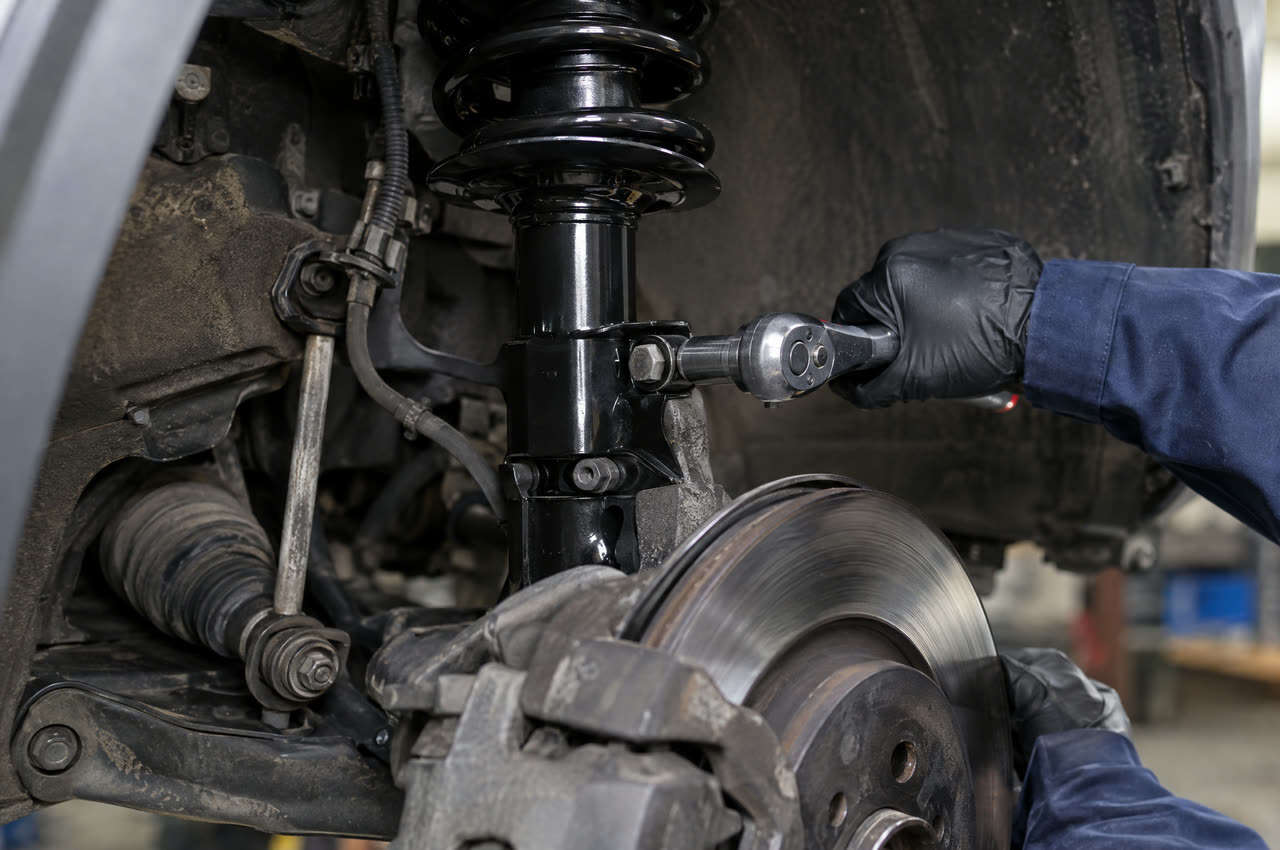
The exhaust system is one of the items checked on an Ontario safety inspection for a car being sold or plated in Ottawa, ON. A leak, a missing muffler or a pipe hanging by a wire will hold up the certificate. If you are getting a safety on a used car, it makes sense to ask about the exhaust while the car is already being looked at underneath. Exhaust parts also sit close to the suspension, and a broken hanger is sometimes mistaken for a suspension clunk, so both get a look when the noise is hard to place.
Book online at any time and choose the muffler and exhaust option. Last drop off is 2pm, and the shop is open Saturday from 9:30am to 2pm.
Questions people ask
Why did my car suddenly get so loud?
A sudden roar usually means a pipe has rusted through, a joint has separated or the muffler has a hole in it. In Ottawa it often happens in late winter, after a season of salt and potholes. The location of the leak decides whether one section or more of the system needs replacing.
What is the rattling noise under my car?
A tinny rattle at idle or at a certain engine speed is very often a loose heat shield. These thin metal covers sit over the exhaust and are held on by small clips or bolts that rust away. It is usually a minor fix, but a shield can also hide a cracked pipe, so it is worth having checked.
How much does muffler replacement cost in Ottawa?
SA Auto Repair has no posted price for exhaust work because it depends on the car and on how much of the system is rusted. A single muffler is a different job from a pipe, a flex joint or a catalytic converter. The car is checked underneath first and you get a price before anything is cut off.
Is it illegal to drive with a loud exhaust in Ontario?
Ontario's Highway Traffic Act requires every motor vehicle to have a muffler in good working order that prevents excessive or unusual noise. A blown muffler can get you a ticket, and an exhaust leak is checked during an Ontario safety inspection. Beyond the law, a leak can let exhaust gas into the cabin.
Can an exhaust leak cause a check engine light?
Yes. A leak ahead of the oxygen sensors lets outside air into the exhaust stream, so the sensors read a lean mixture that is not really there. That can set oxygen sensor or fuel trim codes, and it can make a catalytic converter code harder to diagnose. Fixing the leak first is often part of the fix.
Is it dangerous to drive with an exhaust leak?
It can be. Exhaust contains carbon monoxide, which you cannot see or smell, and a leak under the floor can let it into the car, especially when you are stopped in traffic. If you smell exhaust inside the car, drive with a window cracked open and have it checked soon.