How your car makes heat
The heater in your car has no heating element of its own. It borrows heat from the engine. Hot coolant is pumped through a small radiator behind the dashboard called the heater core, the blower pushes cabin air across it, and a set of doors inside the dash decides how much of that air passes over the hot core and which vents it comes out of.
So when the vents blow cold, the fault sits in one of four places. Not enough hot coolant reaching the core, an engine that never gets fully warm, a door stuck in the wrong spot, or a fan that is not moving air. The symptoms usually point to one of them, and that is where the checking starts.
Low coolant comes first
The most common cause of no heat is low coolant. The heater core is often near the highest point of the cooling system, so when the level drops, air collects there first and the core goes cold while the engine still runs at normal temperature. Heat that is fine on the highway and cold while you sit at a red light on Innes Road is the classic sign.
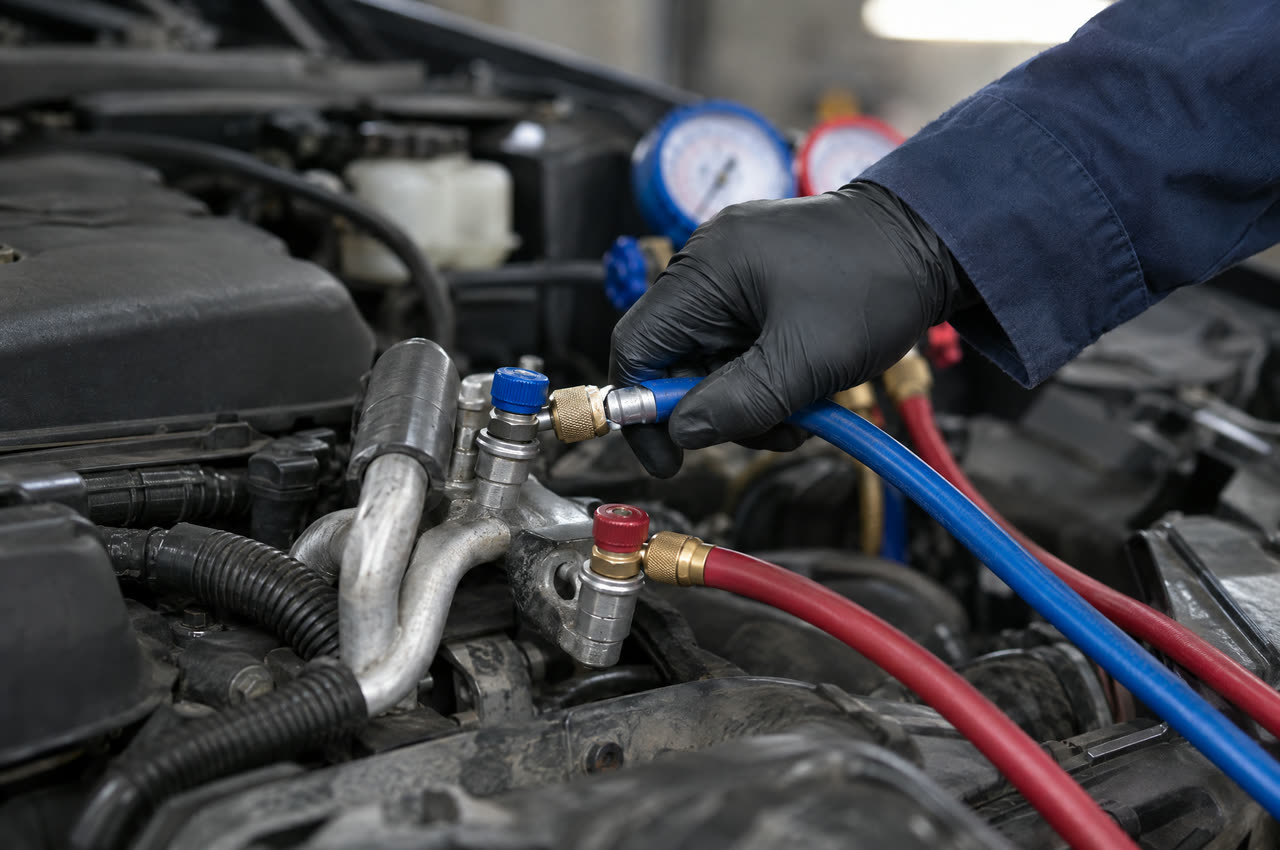
Coolant does not get used up. If it is low, it went somewhere. The radiator, the hoses and clamps, the water pump, the heater hoses at the firewall and the reservoir cap all get looked at, and the system can be pressure tested when nothing shows. Air left in after a recent coolant flush, radiator or water pump job can also keep the heater cold until the system is bled properly.
If the temperature gauge climbs toward hot while the heat goes cold, pull over and shut the engine off. That combination means the engine is short of coolant or not circulating it, and driving on can warp the cylinder head. Overheating is covered on the engine repair page.
A thermostat stuck open
The thermostat keeps coolant inside the engine until it reaches operating temperature. When it sticks open, coolant runs through the radiator all the time and the engine runs cool. In Ottawa that shows up as a heater that is lukewarm at best, a temperature needle that sits low or drops on the 417, and frost that takes forever to clear from the windshield on a minus 25 morning.
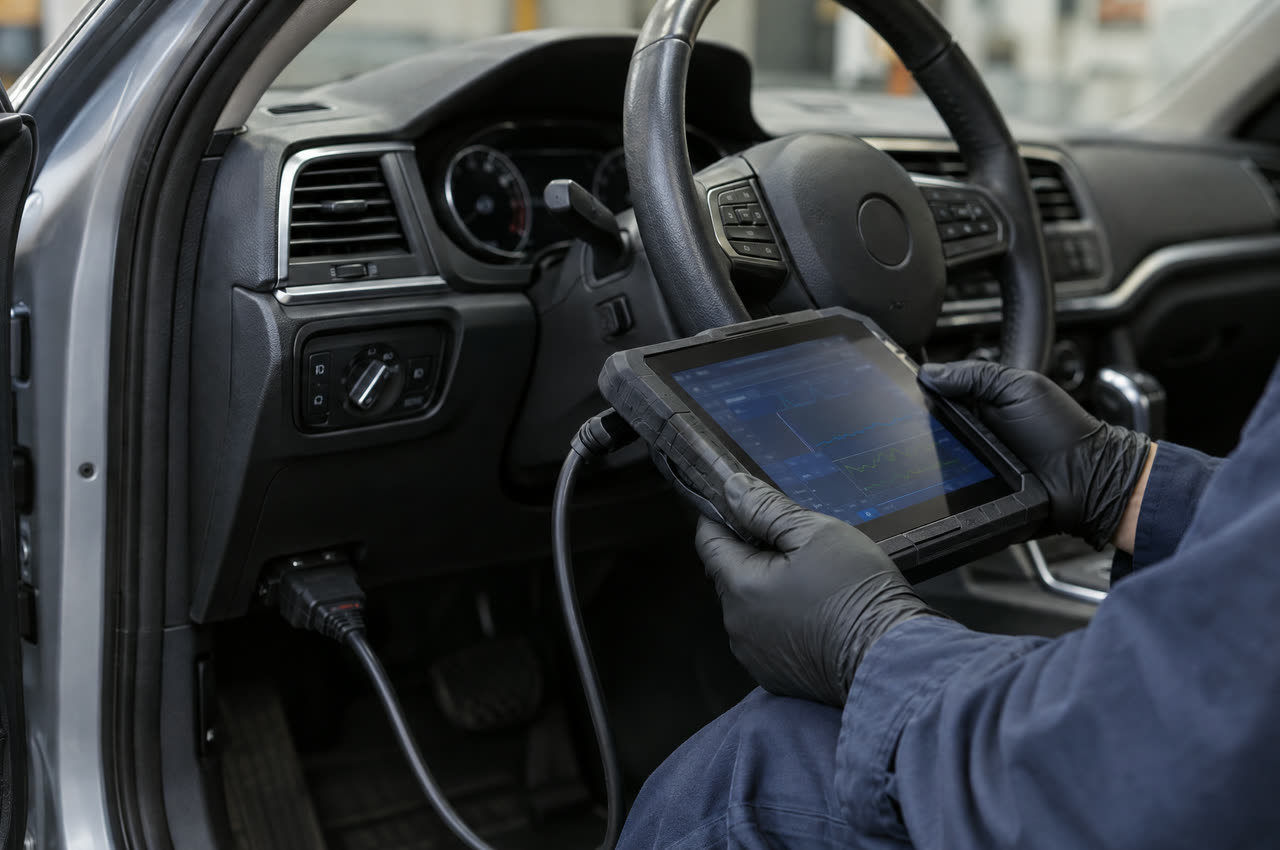
A stuck thermostat usually sets a check engine code, so a computer scan is a quick way to confirm it. It costs you fuel too, because the engine computer keeps adding fuel while it believes the engine is still cold. The thermostat itself is usually an inexpensive part, although on some engines it sits deep under the intake and takes time to reach.
A plugged or leaking heater core
The heater core has narrow passages, and over the years scale and old coolant sludge build up inside them. A partly plugged core gives weak heat even when the engine is fully warm and the coolant is topped up. One quick check is the two heater hoses at the firewall. With the engine warm, if one is hot and the other is barely warm, coolant is not flowing well through the core.
Sometimes a flush clears it. A leaking core gives different signs. You notice a sweet smell inside the car, a greasy film on the inside of the windshield that keeps fogging up, or a damp carpet on the passenger side. Replacing a heater core often means taking much of the dashboard apart, so it is a labour heavy job and worth confirming properly before you agree to it.
Blend doors, actuators and the blower
On most cars built in the last twenty years, the doors in the heater box are moved by small electric motors called actuators. When one fails or strips a gear, you hear clicking or tapping behind the dash, and the temperature dial stops changing anything. On a car with dual zone climate control, one side hot and the other cold almost always points to a blend door. The climate control module often stores a fault code that a scan tool can read.
If no air comes out at all, look at the blower side. A fan that only works on the highest setting usually has a failed blower resistor or control module. A fan that squeals, ticks or cuts out over bumps has a worn blower motor. Leaves pulled in through the cowl and a cabin air filter that has not been changed in years can also choke the airflow. The cabin filter is one of the items usually looked at during a tune up.
Defrost matters more than comfort
In an Ottawa, Ontario winter the heater is your defroster. Without it the windshield fogs on the inside and frost creeps back over the glass on a long drive, and peering through a small scraped hole is how cars end up in the ditch on the 174. The rear window grid is electric and works on its own, but the front glass depends on warm, dry air from the heater system.
Most cars also run the A/C compressor in defrost mode to pull moisture out of the air, which is why a fogging problem can involve both systems. If the defrost blows warm but the glass still will not clear, the A/C side may be part of it.
What it costs and how to book
There is no posted price for no heat, because the fix runs anywhere from bleeding air out of the system to a heater core behind the dash. Once the cause is found you get the price before any parts are ordered.
Book online at any hour and choose the no heat option. In the description, say when the heat goes cold (at idle, on the highway, after a few minutes), what the temperature gauge does, whether you have added coolant lately and whether you smell anything sweet inside the car. Drop offs are taken until 2pm, and the shop is open Saturday from 9:30am to 2pm if weekdays are hard to get to.
Questions people ask
Why is my car heater blowing cold air?
The most common causes are low coolant, a thermostat stuck open, a partly plugged heater core or a blend door that is stuck on the cold side. Low coolant is checked first because it is common and because it can lead to overheating. If the engine warms up normally and the coolant is full, the problem is usually inside the dash.
Why does my car heater only work when I am driving?
Heat that fades at idle and comes back on the highway usually means low coolant or air trapped in the cooling system. At idle the water pump turns slowly and cannot push coolant up into the heater core past the air pocket. A weak water pump can cause the same thing, so the coolant level and any leaks get checked first.
How much does it cost to fix a car heater in Ottawa?
It depends entirely on the cause. Bleeding air out of the system or replacing a thermostat is a small job, while a heater core that needs the dashboard removed is a large one. SA Auto Repair has no posted price for no heat and quotes each car after finding the cause, before any work starts.
Is it safe to drive with no heat in winter?
The bigger problem is the defroster. Without heat the windshield fogs on the inside and frost builds back on the glass, which leaves you driving half blind. If the temperature gauge is also climbing, stop driving, because the engine may be low on coolant.
Can a bad thermostat cause no heat?
Yes. A thermostat stuck open lets coolant flow through the radiator all the time, so the engine never fully warms up and the heater stays lukewarm. It usually sets a check engine code and shows up as a temperature needle that sits lower than normal, especially on the highway in cold weather.