
What a diagnostic scan tells you
What the computer in your car stores when the check engine light comes on, what a scan can read from it, and why the code alone is not the answer.
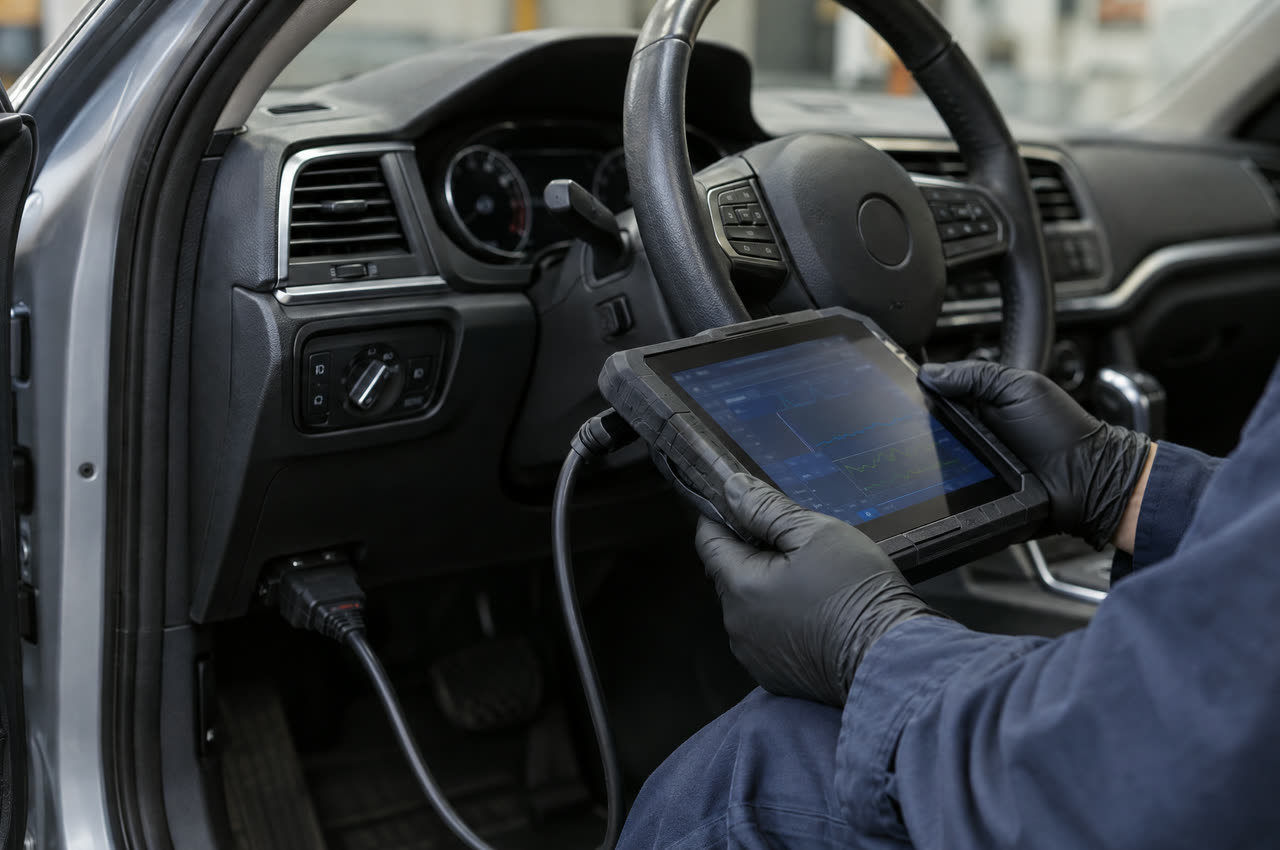
What the computer is watching
Every car and light truck sold here since the late 1990s has an onboard diagnostics system, known as OBD2. The engine computer watches dozens of sensors many times a second: oxygen sensors, airflow, coolant temperature, crankshaft and camshaft position, throttle, fuel pressure and more. It compares what it sees with what it expects.
When something is out of range for long enough, the computer stores a diagnostic trouble code. If the problem affects emissions or could damage something, it also turns on the check engine light.
What a $50 scan reads
A scan tool plugs into the OBD port, usually under the dash near the driver’s knees. In a few minutes it can read:
- Stored codes, the faults the computer has confirmed.
- Pending codes, faults it has seen once but not yet confirmed. These often show up before the light does.
- Freeze frame data for each code.
- Readiness monitors, which show whether the car’s self tests have run since the codes were last cleared.
- Live data, the sensor readings as the engine runs.
Depending on the car and the tool, other modules can be read too, such as ABS, airbags and the transmission. Those systems have their own warning lights and their own codes.
At SA Auto Repair, the OBD computer scan is $50 before tax. The computer diagnostics page covers what is included.
How to read a code
Codes are a letter and four digits. The letter is the system:
- P for powertrain, meaning engine and transmission.
- B for body, things like airbags and seats.
- C for chassis, like ABS and steering.
- U for network, the communication between modules.
A P0 code is generic, meaning the same across every manufacturer. A P1 code is specific to the maker, and you need their information to read it properly. The rest of the digits narrow down the system and the fault.
Why a code is not a part number
This is the part that costs people money. A code describes what the computer saw, not which part caused it.
Take P0171, system too lean on bank 1. It means the computer is adding extra fuel to make up for more air than it measured. The cause can be a cracked intake hose, a leaking vacuum line, a dirty airflow sensor, a weak fuel pump or a clogged injector. Replacing the oxygen sensor, which is what many people buy first, fixes none of those.
P0420, catalyst efficiency below threshold, often gets read as a new catalytic converter. Sometimes it is. It can also be a tired oxygen sensor, an exhaust leak ahead of the sensor, or damage from a misfire that was ignored for months. A converter is an expensive way to find out it was a sensor.
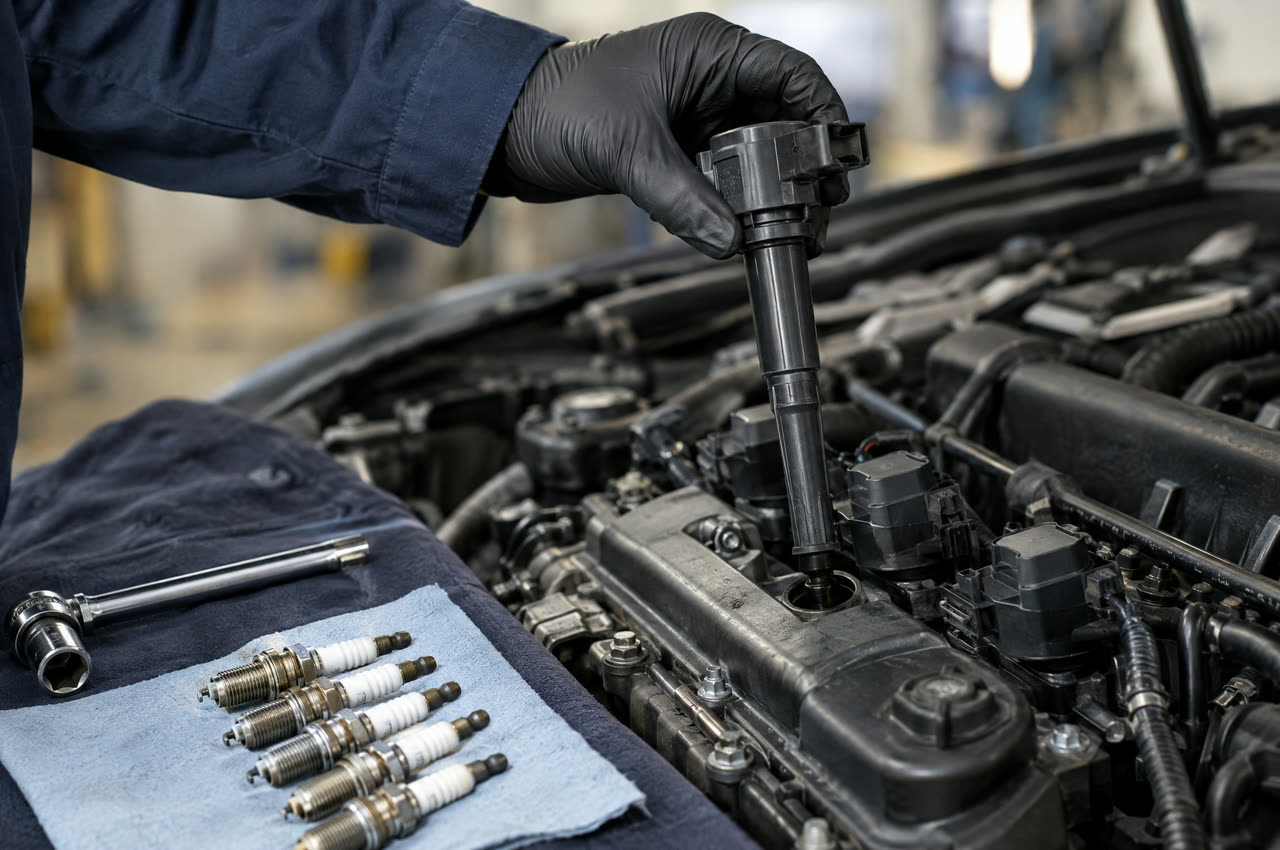
P0300, random misfire, can come from plugs, coils, injectors, a vacuum leak or low compression. The code says the engine is misfiring. Testing says why.
So the scan is the start of the diagnosis. The code tells us which system to test, and then we test it. You get told what the test showed before any part is replaced.
Freeze frame tells you when
Freeze frame is a snapshot the computer saves the moment a code is set. It records engine speed, road speed, coolant temperature, engine load, fuel trims and a few other values.
That snapshot answers questions the code cannot. A lean code set on a cold start at minus 20 points one way. The same code set at highway speed under load points another. A misfire on a cold engine that disappears once warm is a different problem from one that only shows up under load merging onto the 417.
This is also why you should not clear codes before bringing the car in. Clearing the code erases the freeze frame, which is often the best clue we have.
Solid light or flashing light
A solid check engine light means a fault has been stored. Book a scan soon, but the car is usually fine to drive in the meantime.
A flashing light means a misfire bad enough to damage the catalytic converter right now. Ease off, avoid hard acceleration and highway speeds, and get it looked at as soon as you can. The check engine light page has more on what to do.
What a scan cannot tell you
A scan only sees what the computer measures. It will not hear a worn wheel bearing, feel a soft brake pedal or see a leaking water pump. Mechanical problems with no sensor watching them leave no code. If a noise or a leak is your concern, say so in the booking.
A scan also cannot tell how bad a mechanical problem is inside the engine. Low compression, a slipping timing chain or a failing head gasket can set codes, but confirming them takes more testing. That moves into engine repair.
Booking a scan
SA Auto Repair is at Unit 1, 1541 Star Top Road, Ottawa, Ontario, beside Highway 417 Exit 112 at Innes Road. You can book a scan online any time. In the description, tell us when the light came on, whether it is solid or flashing, and anything the car is doing differently. You can add up to four photos, so a picture of the dash is useful too.
Questions people ask
What does a car diagnostic scan tell you?
It reads the trouble codes the engine and transmission computers have stored, plus the data recorded at the moment each code was set. It also shows whether codes are pending or confirmed and whether the car's self tests have finished. That tells you which system has a problem and under what conditions it happened.
Does a trouble code tell you exactly which part is bad?
Usually not. A code describes what the computer saw, such as a mixture running lean or a sensor reading out of range, not which part caused it. Several different faults can set the same code, so the code is where testing starts.
What is freeze frame data?
Freeze frame is a snapshot of sensor readings the computer saves when a code is set, such as engine speed, road speed, coolant temperature, engine load and fuel trim. It shows whether the fault happened on a cold start, at highway speed or at idle. That often narrows the cause more than the code itself.
Should I just clear the check engine light?
Clearing the code turns the light off but does not fix anything, and it erases the freeze frame data that would help find the cause. If the fault is still there, the light comes back. It also resets the readiness monitors, which can matter when the car is inspected or sold.
How much is a diagnostic scan in Ottawa at SA Auto Repair?
An OBD computer scan is $50 before tax at our shop on Star Top Road. You can book it online any time.
Related work
Book a time that suits you
Pick a time on the booking page whenever it suits you, describe what the car is doing and add a few photos. Drop it off by 2pm on the day you picked.